The three types of media: owned, paid, and earned
To understand earned media, it must be placed within the framework of the three types of media presence:
- Owned media : the channels you control entirely (your website, blog, social media, and newsletter). You control 100% of the message, but your audience knows you are talking about yourself.
- Paid media : purchased advertising (Google Ads, LinkedIn Ads, display, sponsorships). You control the message and guarantee visibility, but your audience knows you are paying to appear.
- Earned media : the coverage you receive because journalists, influencers, or other content creators believe you deserve to be mentioned. You do not control the message, but the credibility is at its peak.
For a tech startup, all three types are complementary. However, earned media is the only one that creates third-party credibility.
Why earned media is the most credible
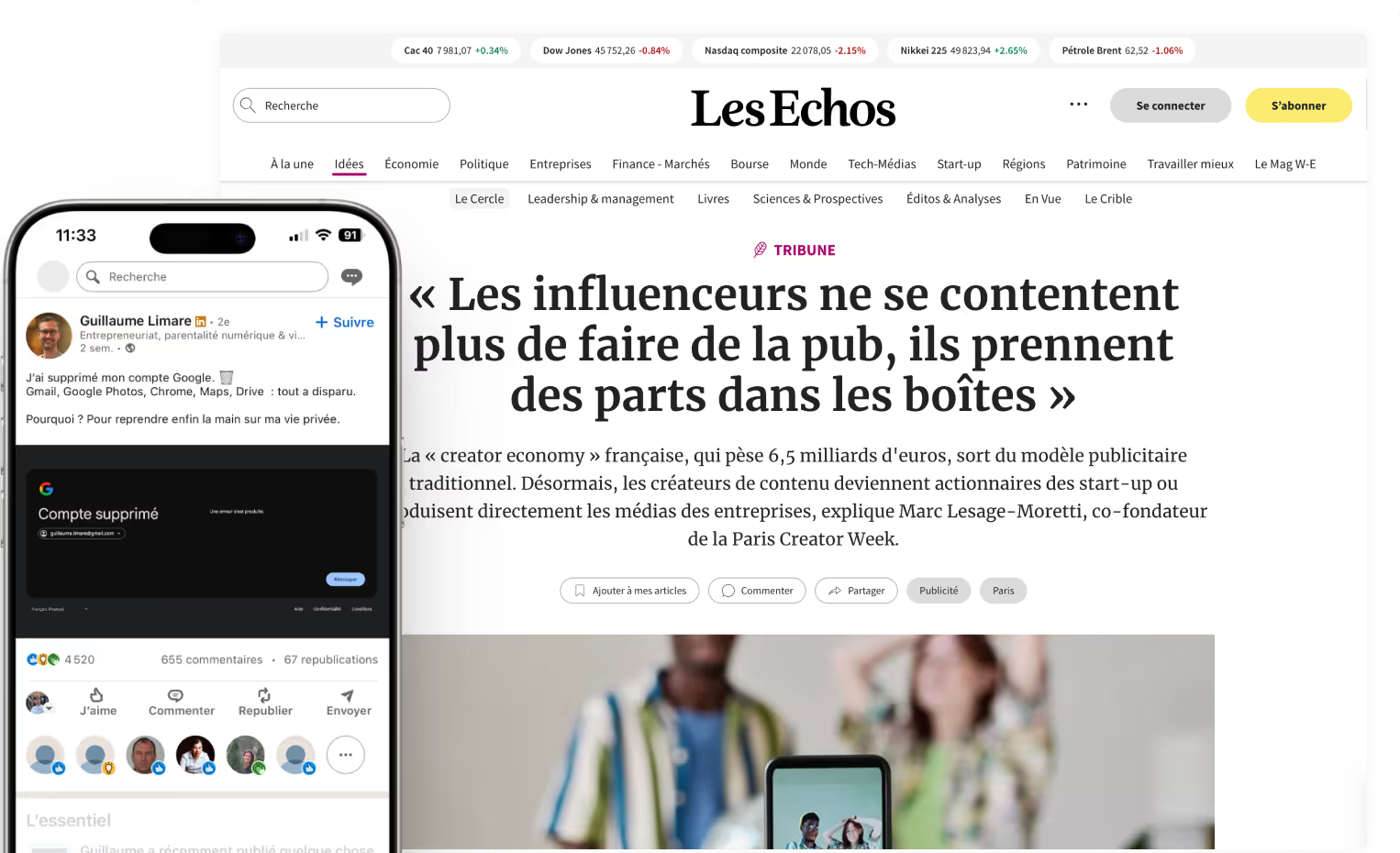
An article about your startup in Les Echos Entrepreneurs is not written by you. It is written by a journalist who decided, independently, that your news was worth covering. This trusted third party changes everything.
Your prospect reading this article knows you did not pay for it to be published. They know the journalist made their own assessment. This is why press coverage in a reputable media outlet has an impact on purchasing decisions that a LinkedIn ad, no matter how well-targeted, simply cannot replicate.
To understand the mechanisms in depth: earned media: why public relations is the most powerful lever.
Earned media and SEO: the backlink effect
Every piece of press coverage in an online publication has the potential to generate a backlink to your site. A link from a high-authority outlet like Les Echos (DR 90+) or TechCrunch (DR 85+) carries SEO value that hundreds of links from obscure sites simply cannot match.
Earned media therefore works on two levels simultaneously: the credibility perceived by your prospects and your site's domain authority in the eyes of Google.
Earned media and GEO: the LLM effect
In 2026, earned media has a third effect that most startups have yet to anticipate: it fuels your visibility within generative AI. ChatGPT, Perplexity, and Google AI Overviews rely heavily on editorial sources to construct their responses.
A startup that is regularly cited in reputable tech media is statistically more likely to appear in LLM responses related to its sector. Earned media is thus becoming a key driver of Generative Engine Optimization (GEO).
What we see with our clients
B2B tech startups that invest consistently in PR observe three cumulative effects over 6 to 12 months: an improved conversion rate on sales pages (as prospects arrive with a higher level of trust), an increase in their domain's DA/DR (via editorial backlinks), and a growing presence in AI-generated responses within their sector.
These three effects reinforce one another. This is why PR cannot be evaluated solely by the number of media hits: it has a systemic impact on your overall digital footprint.