

Should you use the AIDA method to write your LinkedIn posts?

Article summary
- The AIDA method structures a LinkedIn post in 4 stages : Attention (hook), Interest (problem or anecdote), Desire (value of the solution), and Action (call to action).
- The hook does 80% of the work : if the reader doesn't get past the first two lines, the other three stages are useless.
- AIDA works well for long-form posts and carousels, but it can be combined with other frameworks (PAS, BAB) depending on the message, without being limited to a single model.
A well-written LinkedIn post can work wonders, putting you in the spotlight, generating leads, and unlocking business opportunities you never even dreamed of. But how do you make your posts stand out in an endless stream of information? With the AIDA method! In this article, we’ll roll out the red carpet and show you how to infuse the magic of the AIDA method into your LinkedIn posts to keep your audience hooked from start to finish.
Elevate your LinkedIn posts with AIDA
A classic marketing method that remains as relevant as ever
The AIDA method is arguably one of the most well-known and widely used copywriting formulas.
AIDA is an acronym for:
- Attention
- Interest
- Desire
- Action
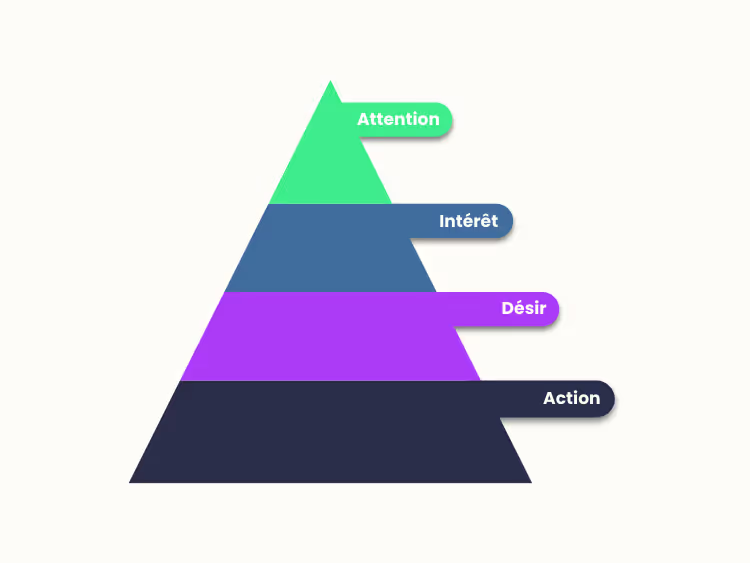
It serves as a guide for writing persuasive copy that
- grabs the reader's attention
- spark their interest
- create a desire for the product or service
- encourage them to take action.
The deal with AIDA is to hold your reader's hand and guide them through this emotional journey until they take action.
Why is using AIDA essential for your LinkedIn posts?
Because 2 million posts are published EVERY DAY on LinkedIn.
You need that extra something to capture your audience's attention before they even blink. The AIDA method gives you a framework to hook your readers from the start and keep them engaged until the very last line.
The Four Steps of the AIDA Method for LinkedIn Posts
Attention (A)
In the saturated world of LinkedIn, a punchy headline or an eye-catching image can set you apart from the rest.
Examples:
- Headline: "5 blunders that sink 90% of entrepreneurs"- Image: A vibrant image showing a person at a crossroads, symbolizing a crucial choice.
A touch of humor, a quote that hits home, or a bold stance: anything goes to make your post the center of attention.
Interest (I)
Once you've grabbed their attention, it's time to dig deeper. Expose a problem or share an anecdote that resonates to keep interest at its peak.
Examples:
- Problem: "One of these blunders is ignoring customer feedback. Did you know that 85% of companies that prioritize feedback see their revenue skyrocket?"- Anecdote: "Last week, I met a company that was turning a deaf ear to customer reviews. The result? A 30% drop in their customer base in 6 months."
Desire (D)
Now, it's time to demonstrate the value of what you offer. Explain how you can solve the problem or improve your reader's situation.
Example:
Example:
- Value: "By adopting a rock-solid feedback strategy, this company not only stopped the exodus of customers but also boosted its revenue by 20% in three months. Curious to know how they did it?"
Action (A)
Finally, provide a call to action. Make your CTA clear and irresistible.
Example:
- CTA: "Join my webinar this Friday and discover the strategies that turn customer feedback into gold mines. Click 'Sign up' now and reserve your front-row seat!"- Other CTA: "Ready to turn your customer feedback into real, tangible results? Send me a message and let's schedule a free strategy session."
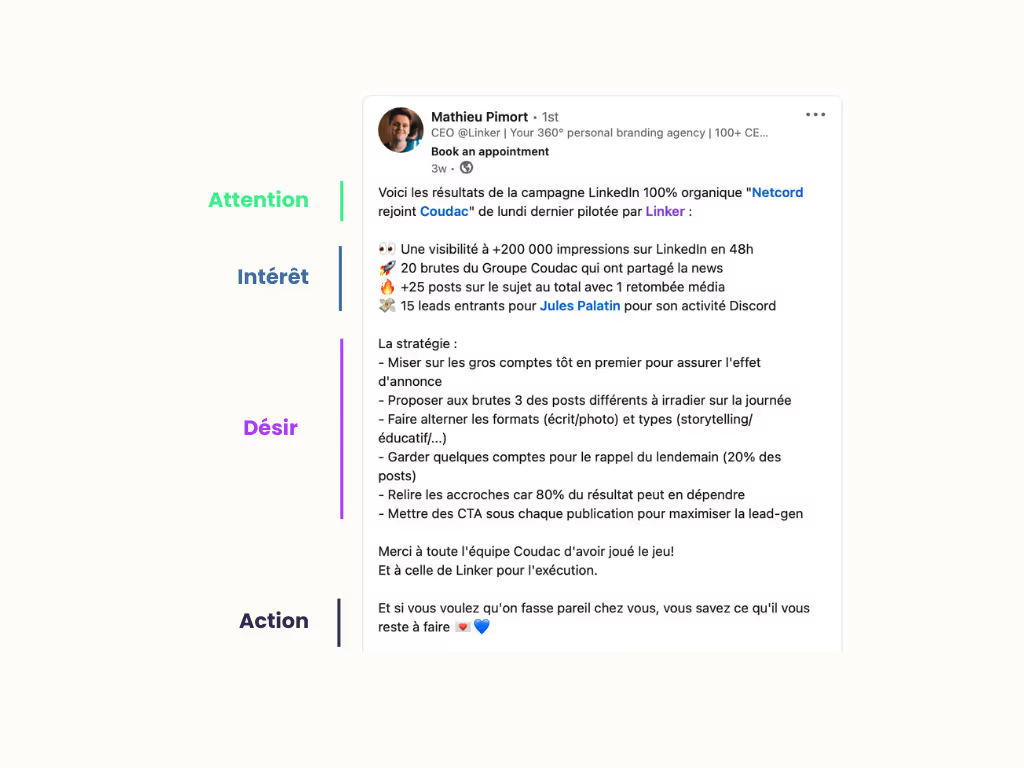
These examples show how you can gradually guide your audience through the AIDA journey, from attention to action, by creating a well-structured and engaging LinkedIn post.
In the end, here is what it looks like 👇
3 tips for applying the AIDA method to your LinkedIn posts
Use visuals
Choose relevant images or graphics that reinforce your message and make your post visually appealing.
Refine your formatting
The ideal post length varies, but a clear, concise format with well-spaced paragraphs often works best.
Craft your CTA
A clear CTA is crucial for encouraging audience engagement. Be direct and persuasive.
Measure Your Post Performance
Analyze LinkedIn Analytics
To measure the performance of your LinkedIn posts, it is essential to dive into the statistics provided by the platform.
Here is how you can do it:
Accessing Analytics:
- Go to the "Analytics" tab on your profile or company page.
- You will find a wealth of information there regarding engagement, views, clicks, and much more.
Reviewing Metrics:
- Post Views: Take a look at the number of views your posts receive. This gives you an idea of your content's visibility.
- Engagement: Examine likes, comments, and shares to evaluate how your audience interacts with your content.
- Click-Through Rate (CTR): CTR is crucial for understanding how your CTAs are performing.
Trend Analysis:
- Identify trends by examining how metrics change over time.
- Spot which types of content generate the most engagement and at what times.
Adjusting Your Strategy
Once you have an overview of your post performance, it’s time to roll up your sleeves and adjust your strategy:
Identifying Improvements:
- If certain posts performed better, ask yourself what made the difference. Was it the format, the topic, the timing, or something else?
A/B Testing:
- Run A/B tests with different formats, headlines, or content types to see what resonates best with your audience.
- Soliciting Feedback:
Don’t hesitate to ask your audience for feedback. Ask questions, request suggestions, and be open to comments.
- Future Planning:
Use these insights to plan your future posts. Incorporate what you’ve learned into your content strategy to continuously improve your performance on LinkedIn.
- Continuous Learning:
Stay up to date with LinkedIn best practices and content marketing trends. The platform is constantly evolving, and so are your audience's expectations.
By regularly analyzing your statistics and adjusting your strategy accordingly, you’ll be well on your way to continuously improving the engagement and effectiveness of your LinkedIn posts.
The Recap
There you go—you’re now equipped with the AIDA method to turn your LinkedIn posts into attention magnets. 🚀
In short:
- Attention : start strong with a hook or an image that grabs attention.
- Interest : pique curiosity by highlighting a problem or sharing a juicy anecdote.
- Desire : showcase the value of your solution and make what you offer shine.
- Action : encourage interaction, whether it’s liking, commenting, or sharing.
Use LinkedIn stats to measure, adjust, and improve. It’s a cycle—a game of continuous improvement.
Now, it’s your turn! Apply AIDA, analyze your performance, tweak your strategy, and watch your LinkedIn engagement skyrocket. 🎯

Mathieu Pimort


Have questions?

Other resources LinkedIn & Media Relations

%20Large.avif)

Go from invisible to essential in your market
Your expertise deserves to be visible, credible, and shared, both on LinkedIn and in the media.


LinkedIn communication and Public Relations agency in Paris.
