

Recruiting through PR and LinkedIn
For tech startups and scale-ups that are hiring but lack brand awareness. The goal: to be visible where candidates look, even before they reply to your message.
+40%

How does PR help with recruitment?
When a candidate receives your offer, they first check what exists about you outside of your own website. If they find no articles or leadership commentary, they will compare your proposal to that of a company they have already read about. Linker creates this content. We handle press placements regarding the problems your company solves, LinkedIn thought leadership for your executives, and spotlights on the people doing the work. On your end, you need spokespeople available for one hour a week and a recruitment plan mapped out in advance. The impact is not measured in weeks. At ALEO, after one year of LinkedIn support, applications received via the network increased by 40%.
3 months before
+40% applications
12 months
1k - 3k k€
Tech candidates research you before applying
49.5%
of recruitment projects in the digital sector are considered difficult, compared to 43.8% across all sectors.
France Travail, 2026 BMO survey
Visibility that supports recruitment must be built before you actually need it. Press placements take weeks to negotiate, and leadership thought leadership takes months to build an audience. Companies that hire quickly aren't the ones that communicate quickly. They are the ones that were already visible when the need arose.
Because you aren't competing against other job ads, but against companies the candidate already knows. An engineer who receives three messages in the same week will remember the one whose name they’ve seen somewhere before. In the digital sector, one in two recruitment projects is considered difficult to fill, well above the French average. Without a recognizable brand, every position costs you in sourcing time, recruitment agency fees, and salary bidding wars.
Twelve months of visibility, step by step
Actual timelines observed in engagements where recruitment was the goal. What we do, what you do.
Linker handles
Interview the founders, select three topics where the company has a genuine perspective, and audit LinkedIn profiles.

You do
Open up your recruitment plan and current job openings.
Linker handles
Rewrite leadership profiles, define editorial strategy, and write and schedule two posts per week under their names.
You do
Approve posts and respond to comments.
Linker handles
Pitch tech and HR journalists on industry topics, never on job openings. Prepare leadership for interviews.
You do
Provide the figures and make the executive available.
Linker handles
Training three to five employees on how to post, providing templates, and weekly reviews of their writing.
You do
Choose volunteers, never conscripts.
Linker handles
Signed op-eds, business interviews, and highlighting new hires and the work they actually do.
You do
Open up internal projects that can be shared.
Linker handles
Tracking application sources, filtering what generates responses, and deciding on the following year's plan.
You do
Share ATS data on candidate sources.
What the press component covers
Four deliverables, produced by Linker, not just advised.
Business angles for the tech press
Three to five angles per quarter, built around the problems the company solves rather than the job openings it has.
Op-eds by leadership
One op-ed per quarter signed by a founder or technical lead, placed in a media outlet your candidates actually read.
Highlighting your teams
Pitching your technical profiles as expert sources, so that journalists quote your engineers rather than just the CEO.
Media training for spokespeople
Interview preparation sessions, billed at €500 to €2,000 each (excluding ongoing support), to ensure that what is said strengthens your employer brand.
The role of LinkedIn in recruitment
This is the one area where LinkedIn carries more weight than the press: it’s the first place a candidate looks.
Executive profile
Complete rewrite of the profile, which is the first page a candidate sees after receiving a message from you.
Editorial strategy
Two posts per week focusing on real work, trade-offs, and failures, rather than corporate culture.
Employee advocacy
Training three to five employees, because an engineer’s perspective is more convincing to another engineer than the CEO’s.
Company page
Aligning the company page with individual posts so that visitors find a consistent story in both places.
Network activation
Targeted connections with the profiles you're looking for, before opening positions rather than just when you start sourcing.
Measuring applications
Tracking what comes through your network versus what comes through job ads, so you can make decisions based on data rather than gut feeling.
The press proves the work exists. LinkedIn shows who is doing it.
For recruitment, neither channel is enough on its own, and the order doesn't matter much.
The value of the press
Credibility
An article wasn't written by you, so candidates trust it.
Longevity
Media coverage remains indexed and can be found months later when a candidate searches for your name.
External validation
A journalist describes your market, which positions the company without you having to brag.
Scarcity
Few startups of your size get featured, so being mentioned sets you apart from the crowd immediately.

The value of LinkedIn
Reach
A founder's post reaches more candidates in a single day than a job ad posted for a month.
Speed
A post goes live the day you open a position, without any negotiation with an editorial team.
Humanization
Candidates see faces, tone, and disagreements—things no article can ever provide.
Consistency
Two posts per week maintain your presence between press mentions.
The cycle
An article gives the leader a topic to comment on LinkedIn, and this comment reaches candidates who would never have read the media outlet. Conversely, a founder who has been posting for six months becomes an identifiable source for journalists in their sector. The next media mention is then easier to secure. After a year, the candidate you contact has already come across your name.
B2B services, one year of LinkedIn coaching: +40% in applications
+40%
5 employees
The 4 mistakes that cost startups candidates
Observed in engagements where recruitment was the stated goal from the start.
Communicating only when hiring
Posts that only talk about open positions are read as advertising. They only reach people who are already looking, which is just a fraction of the market.What to do instead: Talk about the work all year round. The job offer then arrives in a stream that passive candidates have already been following for months.
Having the leader do all the talking
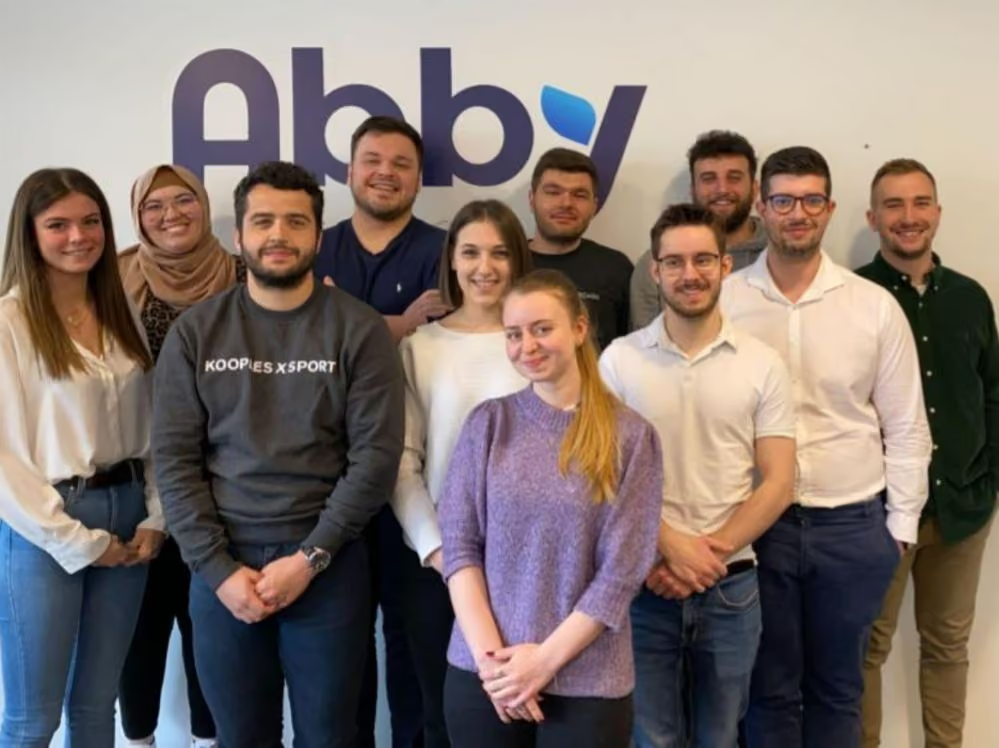
An engineer wants to know who they will be working with, not just who is in charge. A company where only the CEO speaks suggests that the team has nothing to say.What to do instead: Train three to five employees to post. At ALEO, there were five of them after a year, and applications increased by 40%.
Talking about culture instead of the work itself
Content about values and kindness is interchangeable from one company to another. It doesn't set anyone apart and backfires at the first negative review.What to do instead: Share a real technical problem and how it was solved. This is what can be verified and discussed.
Leaving the subject entirely to HR
HR departments produce content aimed at candidates that journalists never pick up. External visibility remains zero, and nothing comes up when a candidate searches for your name.What to do instead: Treat the subject as corporate visibility, using the same business angles you would pitch to the press.
Is this the right lever for your recruitment?
Three out of six situations do not justify this support. They are listed in the table.
Your situation | Relevant | Why |
|---|---|---|
Tech scale-up, 10 to 50 hires per year | The volume justifies a visibility investment that benefits all roles simultaneously. | |
Series A startup opening its first senior roles | A senior candidate rarely accepts an offer from a company they can find nothing about online. | |
Leader ready to publish one hour per week | This is the only non-negotiable condition. Without an available spokesperson, nothing is sustainable in the long run. | |
Ten positions to fill within the month | Too short-term for this approach. A recruitment agency or paid sourcing will be more effective. | |
High turnover with an unaddressed root cause | Visibility will only accelerate staff turnover. Address the root cause before communicating. | |
High-volume recruitment for non-executive roles | Press and LinkedIn audiences do not overlap with these candidates. Specialized job boards perform better. |
How much does recruitment communication cost?
LinkedIn rates are those published by Linker. The press portion is quoted upon request, depending on the number of spokespeople.
LinkedIn Coaching
900 € excl. tax / month
LinkedIn Ghostwriting
€3,000 / month
Full-service package
3.5–7 k€ / month
Questions we get asked about recruitment communication
Timelines, the leader's role, differences from an employer branding agency, budget, and measuring applications.

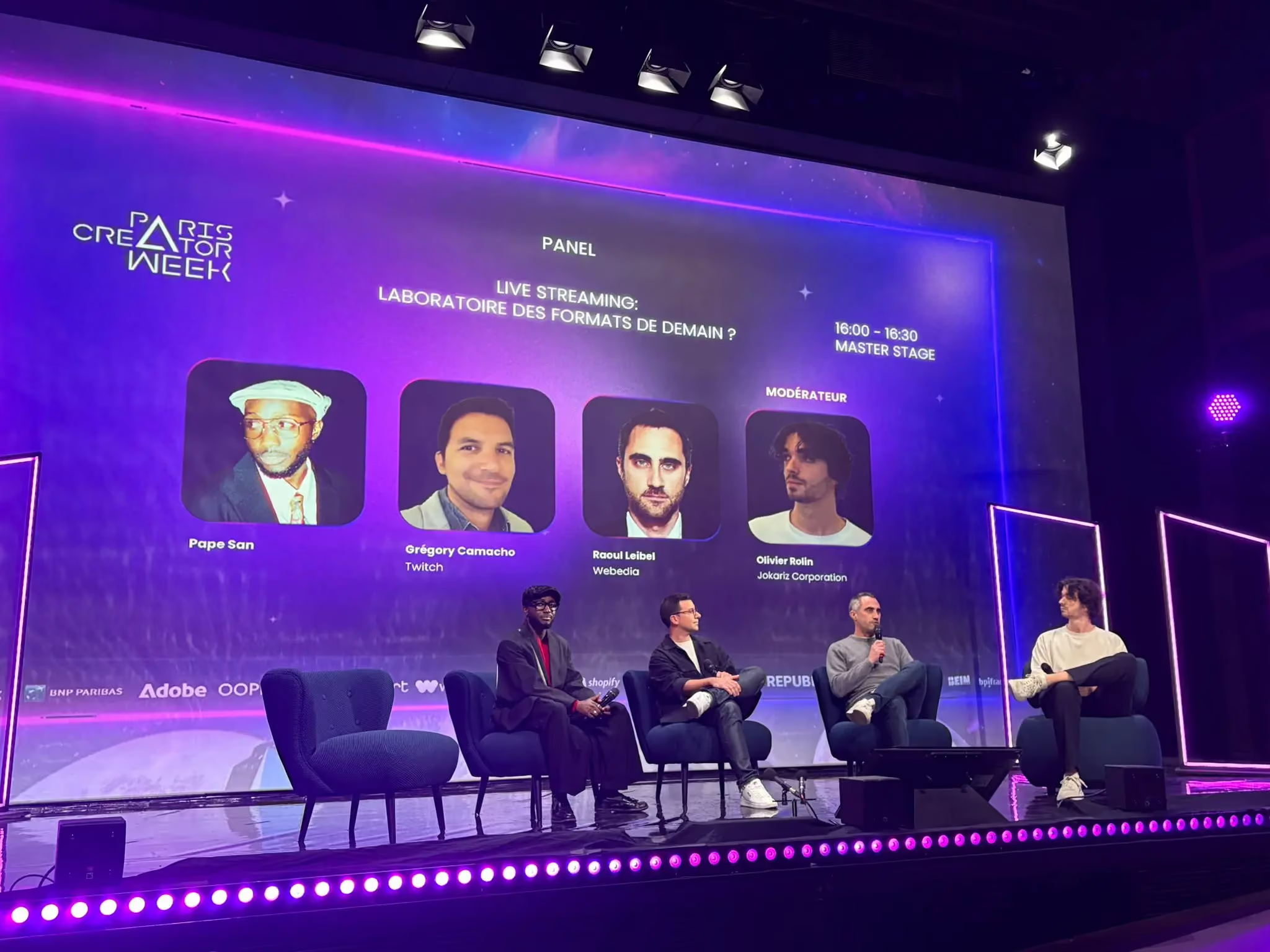
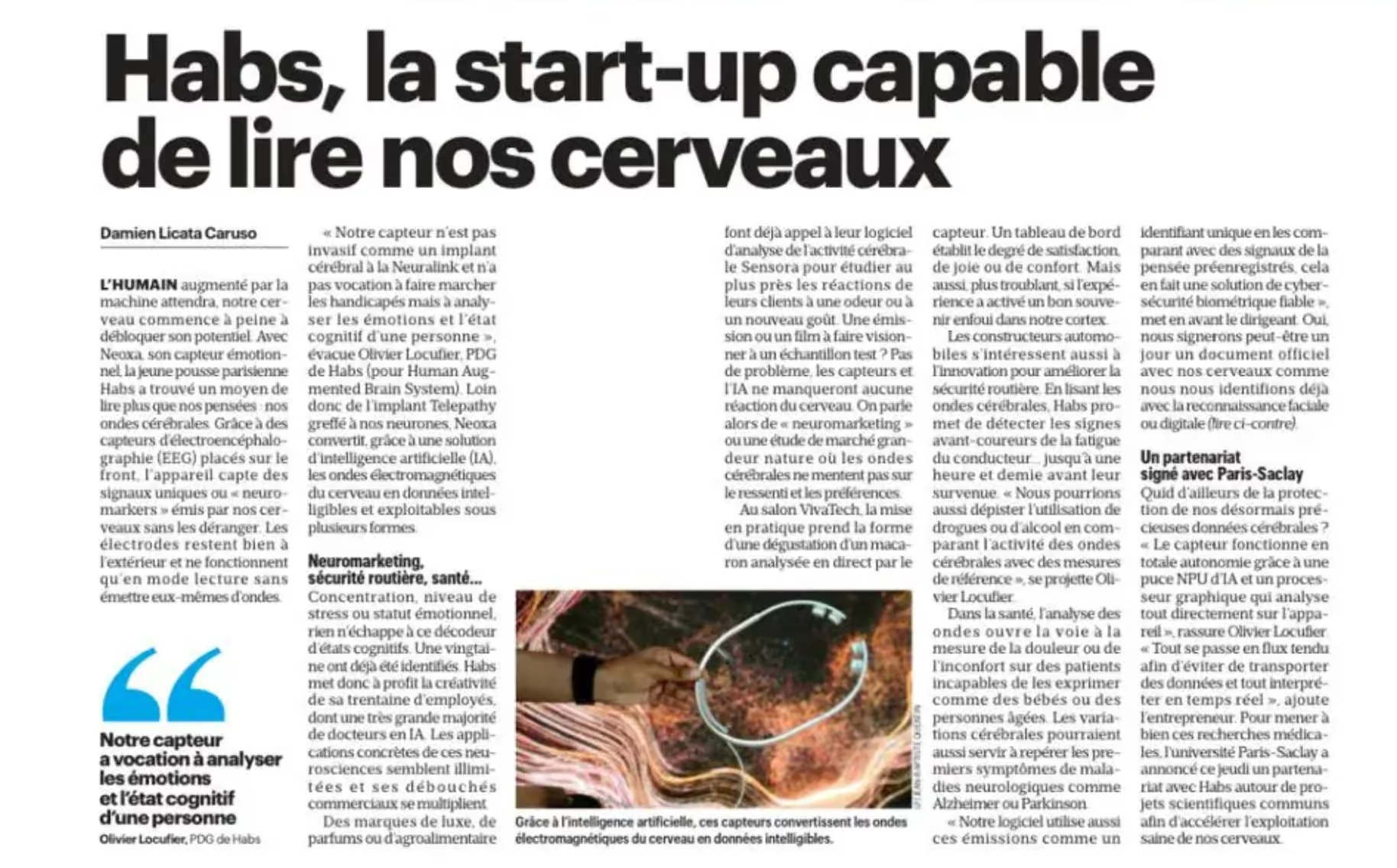
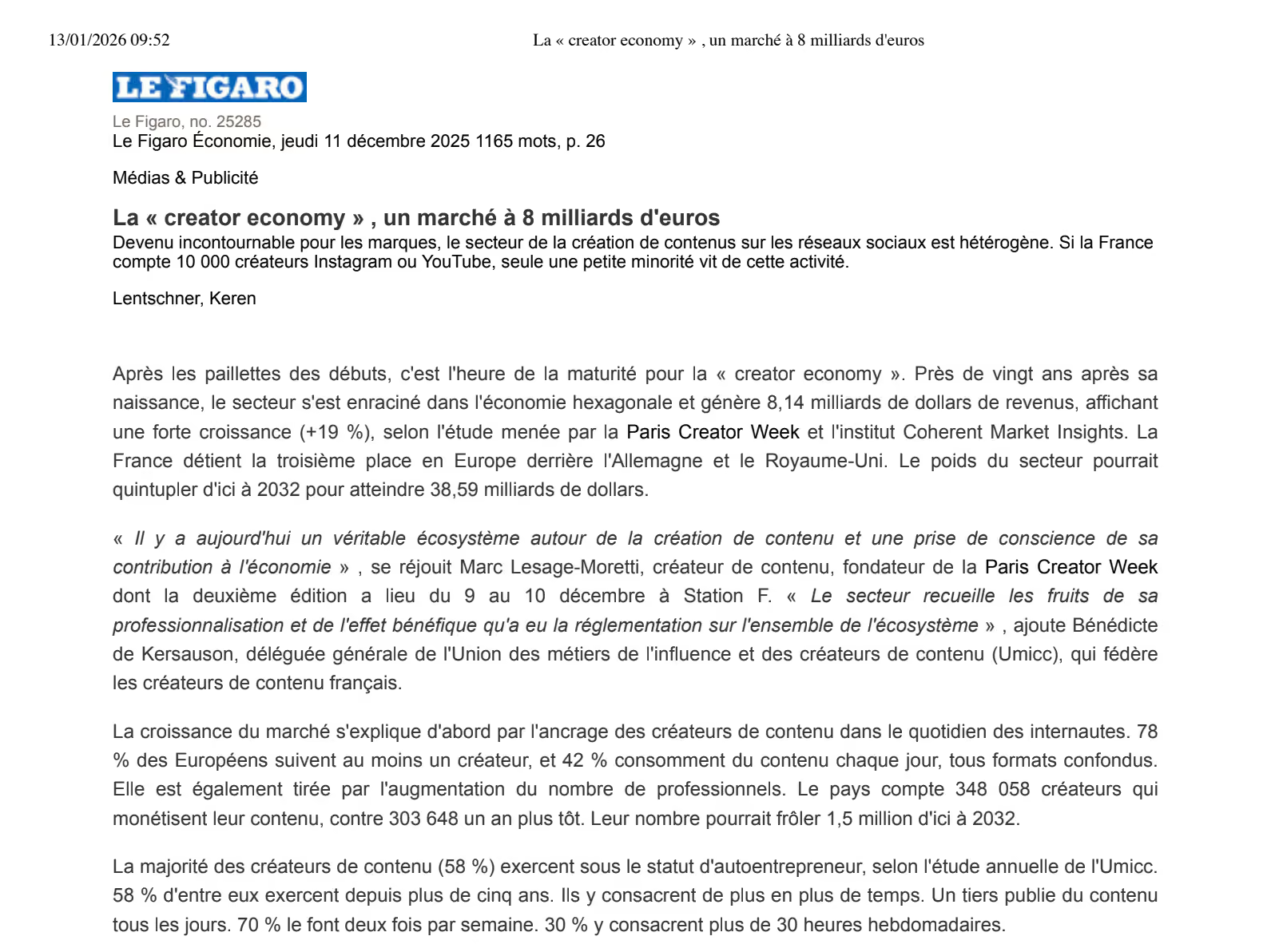
The latest press coverage for tech startups


%201.avif)


.svg%20(1)%201.avif)




.avif)

















%201.avif)


%201.avif)




%201.avif)
.avif)






.avif)




.avif)










%20(1).avif)



























%201.avif)




%201.avif)









Are you opening roles in the next three months? Now is the right time to call.
Thirty minutes. We’ll look at your open roles, what a candidate finds today when they search for your name, and whether visibility is your real bottleneck. If it isn’t, we’ll tell you.