


International PR for scale-ups
For French tech scale-ups expanding into international markets. Build brand awareness before you start selling, rather than just establishing a presence.

7–15

How to get noticed by the foreign press?
International PR isn't about a global approach; it’s about tackling one country at a time. The process begins by identifying your priority market. From there, you need to adapt your messaging to local cultural contexts and build a network of local journalists before you officially launch. Linker works with you to select the market, refine your narrative, build your local media list, and coordinate announcements with your French operations. On your end, you will need an existing client or partner in that market, as well as a spokesperson capable of conducting interviews in the local language. Expect a three-month lead time per market before seeing your first results.
3 months before
7-15 mentions
12 months
3.5k - 7k k€ /month
Exporting doesn't mean you're known over there
95%
French cybersecurity scale-ups export outside of France, compared to 61% of startups in the same sector.
Bpifrance, 2026 Cybersecurity Radar
An English or German journalist does not know you, and nothing you have achieved in France matters to them. They haven't read your press coverage, they don't know your investors, and your French reputation means nothing to them. Everything has to be done from scratch, market by market, with a network of contacts that takes at least three months to build. This is why an international campaign should not be launched on the day the office opens, but three months before.
Yet, French companies are exporting more and more. In cybersecurity, for example, 95% of French scale-ups sell outside of France. Despite this, revenue generated outside of France has fallen by 2%, and the ecosystem is growing more slowly than its British and German counterparts. Being present in a market and being known there are two different things, and the latter does not happen on its own.
Three months before, nine months after: the timeline
Actual durations, observed market by market, never globally. What we do, what you do.
Linker does
Analyze actual traction by country, the local media landscape, and established competitors. Select a single market.

You do
Review your sales and traffic figures by country.
Linker does
Rewrite the narrative using the target country's cultural references. This is not a translation: comparisons and examples must be adapted.
You do
Validate what can and cannot be said in this market.
Linker does
Build a list of key journalists in the country and make informal contact before any official announcement.
You do
Identify a local client or partner willing to speak.
Linker does
Press release and media kit written in the local language, with local distribution coordinated with the French announcement.
You do
Make the spokesperson available to the local press.
Linker does
Op-eds and interviews in the local press, focusing on key market issues rather than your arrival.
You do
Provide the initial results achieved in this market.
Linker does
Follow the same sequence for the next country, reusing what worked and the network already in place.
You do
Choose your next country based on data, not intuition.
What the press component covers
Six deliverables, produced by Linker rather than just advised.
Choosing the priority market
Analysis of actual traction by country and the local media landscape to select just one. This is the most costly decision if you get it wrong.
Adapting the narrative to the country
Rewriting comparisons, examples, and references. A literal translation is spotted within two sentences and immediately disqualifies the sender.
List of local journalists
Named contacts in the country, built one by one. No international distribution database can replace this work.
Localized press releases and media kits
Written in the local language, not translated. The market figures cited are those used by the local editorial team.
Market entry announcement
Local distribution coordinated with the French announcement, so that both markets do not hear the news weeks apart.
Opinion pieces in the local press
Focus on substantive market topics rather than your arrival, which is only of interest to you.
The role of LinkedIn internationally
Only two items: LinkedIn usage varies significantly from one country to another, while the local press remains the reliable channel.
Executive profile in English (LinkedIn)
The first point of contact for a foreign partner or journalist looking to find out who you are.
Media presence in the target market (Press)
Publish content on local issues several months before entering the market. It is the most cost-effective way to test an angle.
Local press builds your credibility. LinkedIn makes you accessible.
When it comes to a funding round, these two channels don't work at the same time or for the same duration.
The value of the press
Legitimacy
An article in the local language is worth more than an English page on your own website.
Endorsement
A local journalist tells your buyers that you exist—something no salesperson can do.
Duration
Coverage remains indexed in the local language and appears in every local search.

The value of LinkedIn
Continuity
The executive maintains a presence between two markets without the need to fund new campaigns.
Test
An angle is tested through publication before committing to a press campaign in the country.
Cost
Speaking out costs nothing extra per country, unlike working each market individually.
The cycle
Before entering a market, the executive's posts on national issues serve as a test: they reveal which angles truly resonate with that market. These angles then become the ones pitched to local editorial teams. Once articles are secured, they circulate throughout the country, reaching far beyond your existing audience. The executive then becomes a recognized source for the local press.
European initiative, 3 months: 50 press mentions across Europe
+50
6 titles

The 4 costly mistakes of international expansion
Observed in the market entries we support and those we are brought in to fix.
Translate the French press release
A literal translation is obvious within two sentences. The comparisons, market figures, and cited references are French, meaning the text fails to resonate with a local audience.
Instead, rewrite the narrative using local cultural references. Only the facts remain the same.
Targeting multiple countries simultaneously
Your budget is spread too thin, and no single market is reaching the threshold where journalists start calling you back. Three markets handled halfway produce less impact than one handled properly.
Instead, do this: Pick a market, stick with it for three months, then move on to the next one using what worked.
Assuming that French media coverage will carry over
International journalists don't read the French business press and aren't familiar with your investors. Your French press kit provides them with no usable evidence.
Do this instead: Build local proof—a client, partner, or key metric from that specific market.
Entrusting the country to an agency without a network
Broad distribution in a country where no one knows you is ineffective. Without direct contacts on the ground, your press release will simply land in inboxes that will never be opened.
What to do instead: Demand the list of names of the targeted journalists before signing, country by country.
Is your market ready for a campaign?
Three out of six situations do not justify an international press campaign. They are listed in the table.
Your situation | Relevant | Why |
|---|---|---|
Clients already signed in the target market | Local proof already exists. It is the most solid starting point for a press launch. | |
Funding intended to finance expansion into a country | Funding announcements and market entry should be handled together, three months apart. | |
Product available and documented in the language | A journalist who cannot try the product in their own language will not write about it. | |
No clients or team on the ground yet | There is nothing to tell a local news desk. Start with one first client, even a small one. | |
Targeting five countries in the same year | Your budget is spread too thin and no market reaches the necessary threshold. One country at a time, three months each. | |
Looking to translate your content | This is localization work, not PR. The two are commissioned separately. |
How much does a funding announcement cost?
Market benchmarks for France, per market. The number of countries is the primary cost driver.
Market entry
€3.5k-7k / month
European expansion
€6k-12k / month
Executive messaging
0.9-3k k€ / month
The questions startups ask about their international expansion
Local agency, translation, country selection, deadlines, scope of French impact, budget, language.

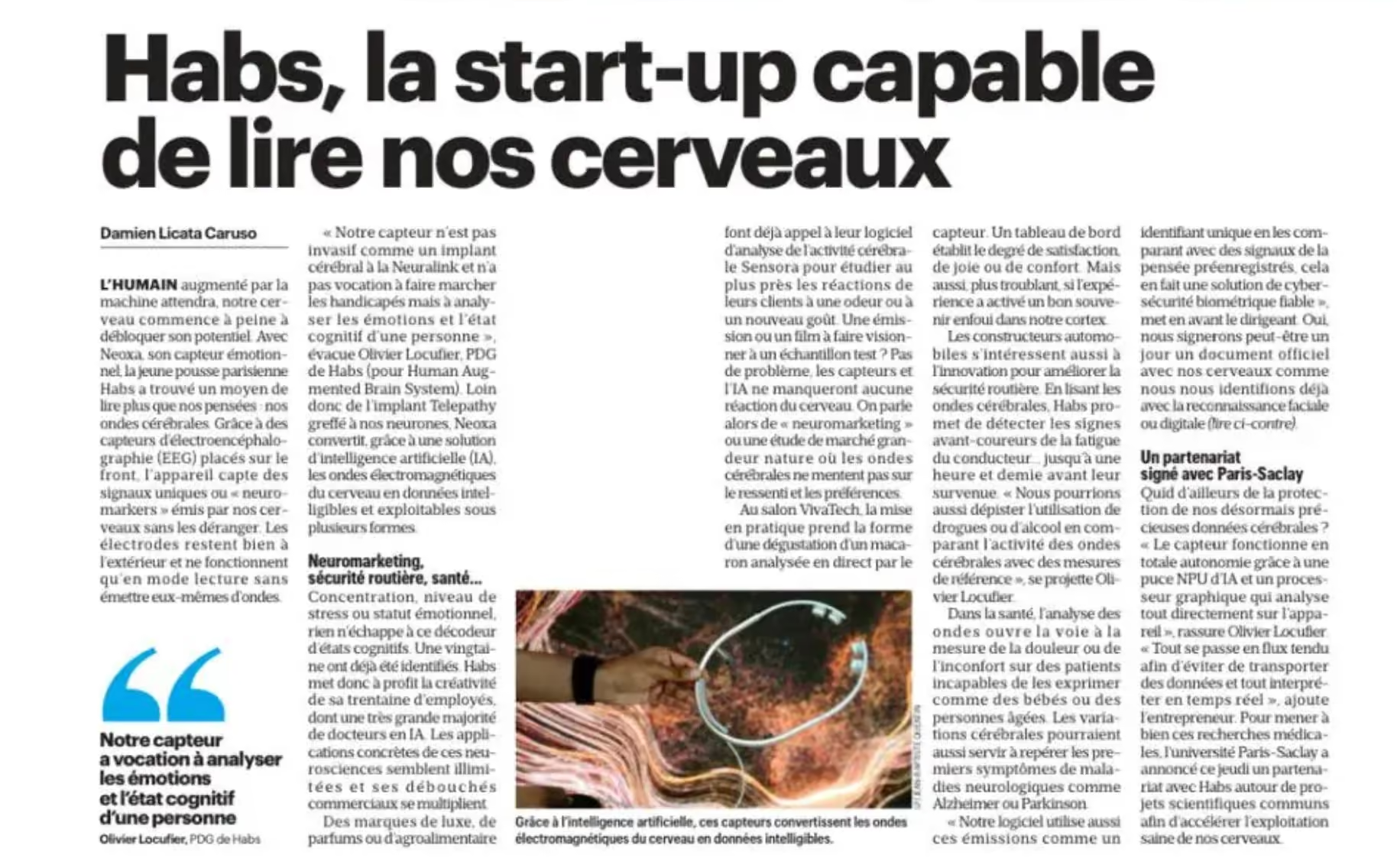
The latest press coverage for tech startups








































































































































Are you launching a new market in the next six months?
Now is the right time to call.
Thirty minutes. We’ll look at your target country and the traction you’ve already gained there. Then, we’ll determine if local press is the right lever for you at this stage. If it isn’t, we’ll tell you.


