

How to manage a PR crisis and protect your online reputation?

Article summary
- A PR crisis is a negative viral surge that can erupt in a matter of hours. It is a structural risk, not an isolated accident.
- Anticipation relies on 3 pillars : real-time monitoring, identifying sensitive areas, and having a ready-to-use crisis plan.
- When a crisis hits : analyze the scope, activate a crisis team, adopt a transparent stance, and respond where the crisis originated. Speed and sincerity make all the difference.
A poorly judged post. A campaign that flops. An influential customer calling out your company on TikTok or LinkedIn… On the internet and social media, it only takes a few hours—sometimes just minutes—for a PR crisis to erupt, damage your reputation, and undermine a business you’ve spent years building.
Today, a PR crisis is no longer an isolated accident. It is a structural risk in a digital environment where every brand, regardless of size, can be confronted with a media crisis.
The virality of social media, online reviews, the power of digital word-of-mouth, and the massive circulation of weak signals make managing your online reputation more complex than ever.
The good news? It is possible to anticipate, contain, and turn the situation to your advantage — provided you know the right instincts, the pitfalls to avoid, and the levers to pull at the right time. We’ll guide you through managing this type of event.
Understanding what a "PR crisis" is
What exactly is a PR crisis?
A a PR crisis, it is a viral frenzy that is negative, the sudden emergence of a controversy, amplified by the web, social media, and online outlets, which spreads rapidly across digital platforms and sometimes even reaches the evening news.
It often starts on a platform like X (Twitter), TikTok, or LinkedIn, and can tarnish a company or public figure in just a few hours, starting from a seemingly harmless trigger : content that is poorly received, a clumsy reaction, or a misaligned strategy.
Unlike a simple critique, a PR crisis goes viral because it resonates with societal or emotional issues. It mobilizes a community and creates a snowball effect.
The main triggers of a PR crisis
Behind every PR crisis, there is often a seemingly minor, poorly assessed, or mishandled starting point : a misinterpreted post, a failed advertisement, an awkward silence… These crises can take various forms, but we regularly see the same types of triggers, amplified by emotion, timing, and virality.
Here is a summary of the most common causes, along with concrete examples:
What are the consequences of a PR crisis?
A PR crisis is never trivial. Even if it seems limited to the digital sphere at first, its repercussions can quickly spill over into the company's overall reputation, sales performance, and internal morale .
Here are the most common consequences, ranked by impact:
1. Loss of trust : customers, partners, and employees lose faith in the brand, its ethics, or its reliability. The reputational capital, built up patiently over time, can collapse in a matter of hours. The company's image is weakened.
2. Loss of customers and revenue : consumers express their disapproval through unsubscribing, cancellations, or pausing purchases. Ongoing marketing campaigns become ineffective, or even counterproductive.
3. Uncontrolled media exposure : the negative buzz moves beyond digital channels to be picked up by traditional media (press, TV, radio). The company loses control of its narrative : journalists, internet users, and influencers take over.
4. Internal weakening : demotivation or embarrassment among employees who find themselves exposed or questioned by their peers, candidates withdrawing their applications, and a leadership crisis with the questioning of management or the communications department.
5. Operational pressure increases with an overload of customer service and community managers: an influx of messages, requests for explanations, insults, trolls… leading to a crisis-driven work pace, sleepless nights for the crisis communications team, widespread stress, and consequently a higher risk of errors due to rushing.
"A poorly managed crisis can fuel a cycle of secondary crises: every poorly phrased reaction reignites the controversy."
Some brands recover… but others never do. Everything depends on the speed, sincerity, and consistency of the response provided.
How can you avoid or anticipate a PR disaster?
Anticipating a PR disaster is no longer a luxury, it is a necessity. Poor crisis management does not always stem from a communication error, but often from a lack of preparation.
Prevention relies on three pillars: active monitoring of your brand image, identifying areas of vulnerability, and implementing a clear and actionable crisis plan.
It is not about controlling everything, but about being able to react quickly with pre-defined tools and processes.
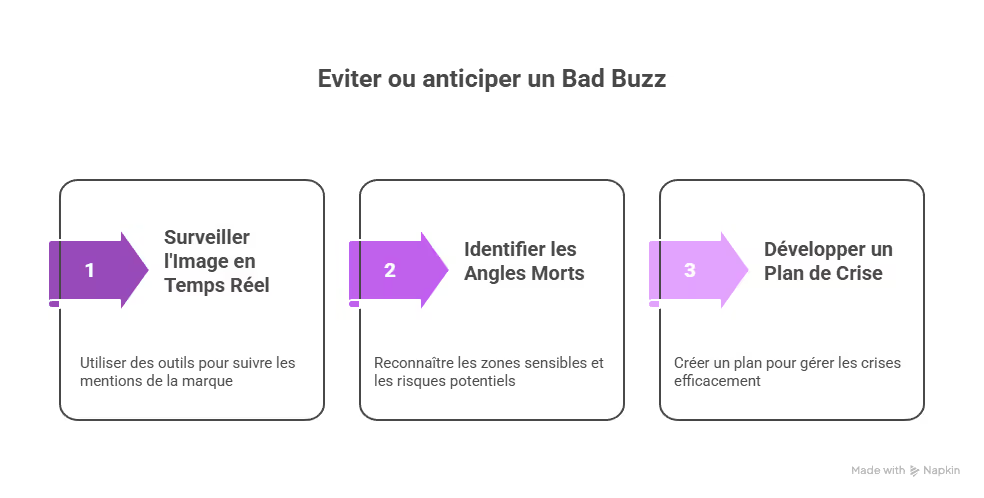
Monitor your reputation in real time
Social media and the internet never sleep. It is therefore crucial to maintain constant monitoring using tools such as:
- Mention,
- Meltwater,
- Google Alerts, or
- Talkwalker.
These tools allow you to quickly pick up on early warning signs—those small comments or posts that could escalate and become problematic if you don't react in time.
Identify your sensitive areas
Some topics are higher risk than others: controversial subjects related to the environment, gender issues, or even past mistakes that have left a mark.
Identifying these blind spots in your communication or organization allows you to better manage your messaging and avoid missteps.
Go through the introspection exercise that might sting a little, but will save you, to prevent vulnerabilities before they are exposed to the public.
Anticipate with a crisis plan
A good crisis plan is your best insurance. Prepare an internal survival kit, even a minimalist one:
- A standard scenario covering the main potential crises.
- Clearly defined roles :
- Who alerts?
- Who decides?
- Who speaks? (and who stays silent)?
- Message templates adaptable to any situation (social media, press releases, client emails, etc.).
- An express approval process to avoid back-and-forth emails at 10 p.m.
This way, when a crisis hits, you don't waste time improvising and can respond in a coordinated and effective manner.
What to do when a PR crisis hits?
When a PR crisis breaks out, the speed and precision of your response are crucial.
Reacting quickly: the 3 key steps
Step 1: Analyze the scope of the crisis
Before taking any action, you must understand the scale of the phenomenon:
- Who is talking about your brand?
- On which networks or media outlets are these discussions taking place?
- What is the reach and virality of these exchanges?
This information allows you to prioritize your responses andassess the actual risk. To do this, monitoring tools provide real-time analysis of the volume, tone, influencers involved, and the channels concerned.
This assessment prevents overreacting to the slightest alert. Sometimes, a simple, attentive silence is enough for the tension to subside on its own.
Step 2: Activate the crisis team
Once the scope is defined, quickly assemble the right expertise. The crisis team should include representatives from communications, legal, human resources, and management if possible.
This multidisciplinary team ensures coordinated management, avoiding isolated decisions and communication errors, with a clear organizational chart
Step 3: Stop automated processes
In the middle of a crisis, all automated or scheduled posts become a risk : they can broadcast inappropriate or contradictory messages.
It is imperative topause these automations and implement strict manual approval for any new content.
Adopt the right communication stance
In a bad buzz situation, the way you communicate is crucial.
A clumsy communication can escalate the crisis, whereas a clear, honest, and controlled approach helps to limit the damage and start rebuilding trust.
Choose the right channels to respond
Start where the crisis began
When a PR crisis hits, the first rule is simple: address the audience first where the crisis started.
Whether it’s on TikTok, Reddit, X (formerly Twitter), LinkedIn, or any other social network, avoid fleeing the original platform. Ignoring the main channel leaves the field open to rumors, speculation, and allows third parties to control the narrative.
Responding directly where the discussion took shape shows that you are taking the situation seriously and that you are capable of meeting the specific expectations of users on that platform.
Don't leave your other audiences in the dark
A PR crisis doesn't just affect users on social media; it can also sow doubt among your customers, business partners, internal staff, and investors. It is essential to communicate proactively with these stakeholders to ensure they do not feel overlooked or uninformed.
Clear and tailored communication helps to maintain trust, even during a crisis, for example through a personalized email.
Internal email template — Team communication
Subject: Important update — Managing a sensitive situation
Hi everyone,
We would like to inform you that we are currently managing a sensitive situation regarding [brief description of the crisis, e.g., negative feedback related to a recent post].
Please be assured that management and the crisis team are fully mobilized to handle the situation with transparency and efficiency. We are doing everything possible to limit the impact and address any questions promptly.
During this time, we ask that you:
- Refrain from sharing unverified information on social media or with external contacts.
- Direct any questions or comments to [name, role, contact] to avoid any misunderstandings.
- Maintain the confidentiality of internal discussions regarding the crisis.
We appreciate your professionalism and support as we navigate this together.
Thank you all for your understanding.
Best regards,
[Name / Job title / Contact]
How to bounce back after a PR crisis?
Once the storm has passed, it is time to learn from the incident to fully understand what really happened so you can better prepare for the next downpour.
Learning from the incident
Take the time to debrief calmly, once everyone has caught their breath and emotions have settled.
What you learn today, even from your mistakes, will become your best insurance against future crises:
- Root cause analysis
- Effective responses and areas for improvement
- Updating the crisis management plan
- Internal training and strengthened communication
Highlight your progress
Don't let this experience fade away like bad press. Showcase your ability to evolve, listen to your customers, and improve. Show that you were able to turn this challenge into an opportunity as proof of commitment and transparency.
In short, every PR crisis is a blessing in disguise—a necessary evil to help you bounce back stronger.
In summary: key takeaways
- Actively monitor your image on the web and social media
- Identify the source of the crisis as soon as the first warning signs appear
- Provide a clear, sincere, and well-calibrated response
- Implement a structured communication strategy
- Stay calm and maintain a transparent stance
- Learn from the experience to prevent a similar situation from recurring
Need help? Call on a specialized agency
Don't have the resources in-house? Outsourcing can help you avoid reacting impulsively or communicating poorly.
The agency Linker supports brands and executives through digital crises. From monitoring to public statements, we offer:
- Online reputation audit & proactive monitoring
- Crisis communication plan tailored to you
- Response management and multichannel communication
- Executive coaching & media training
Bonus: The good, the bad, and the ugly of PR crises
Well-Managed PR Crises
Poorly Managed PR Crises
What these examples show
- Speed and transparency are key : responding quickly and honestly often defuses tension and prevents a PR crisis from escalating.
- Listening and adapting : understanding public sentiment to adjust your tone and message is essential.
- Silence or denial comes at a high price : they fuel distrust and cause lasting damage to your image.
- Clear apologies are not always enough : concrete actions must accompany communication to restore trust.

Mathieu Pimort


Have questions?

Other resources LinkedIn & Media Relations

%20Large.avif)

Go from invisible to essential in your market
Your expertise deserves to be visible, credible, and shared, both on LinkedIn and in the media.


LinkedIn communication and Public Relations agency in Paris.
