

Public relations: continuous presence or one-off campaigns?
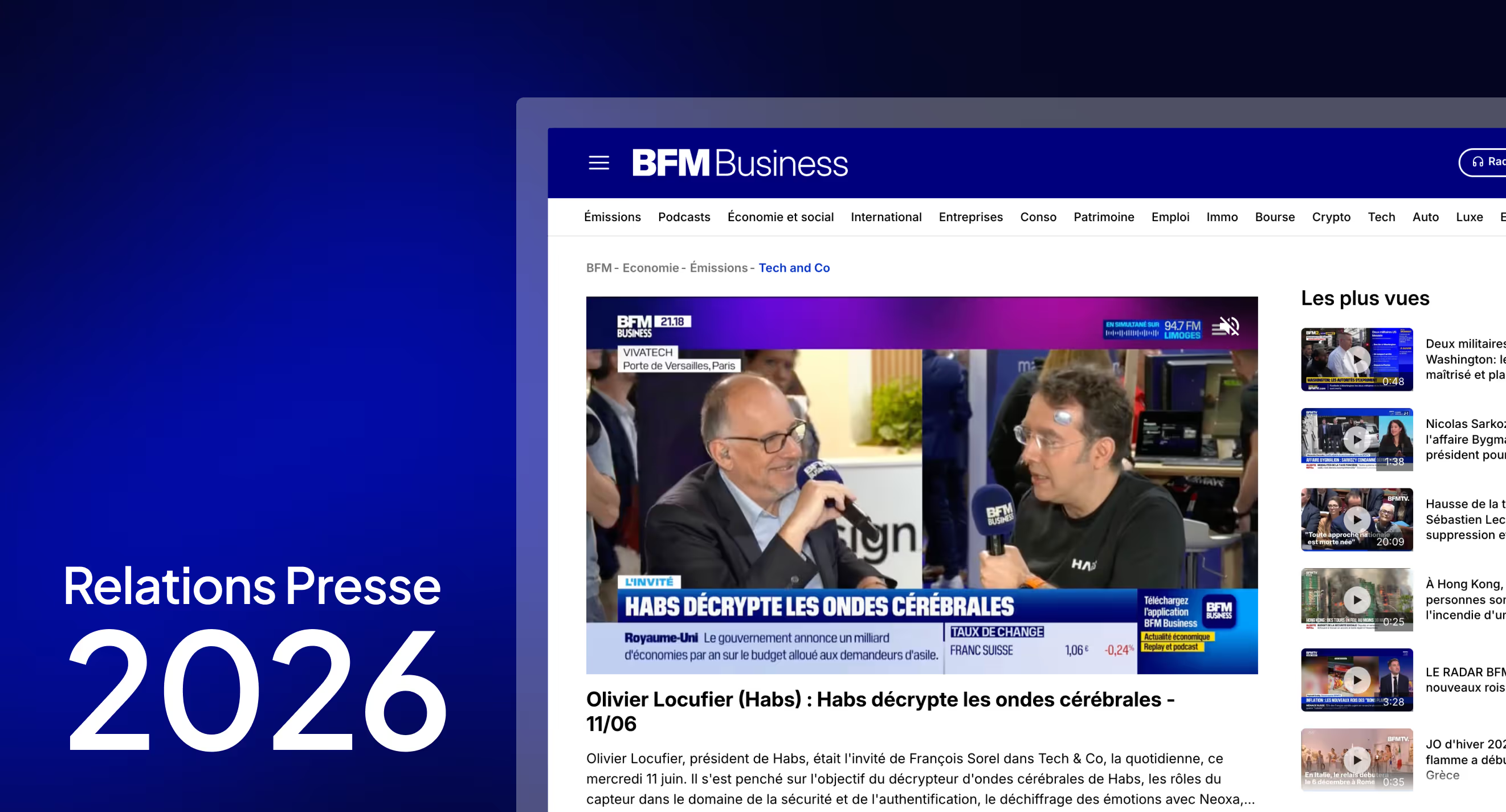
Article summary
- PR is not an ON/OFF switch : credibility is built over time, through regular and useful contributions to the media.
- One-off efforts (fundraising, launches) are necessary but insufficient : without a continuous foundation, visibility fades immediately.
- The winning combo : a solid foundation (3 to 6 statements per year) + activated highlights. When the foundation is in place, major announcements perform much better.
Public relations are often imagined as an "ON/OFF" switch. When you have news, you press it: press release, follow-ups, some coverage... then radio silence until the next big announcement. In reality, the real challenge is knowing whether you want to exist in the media only from time to time... or gradually become a voice that matters.
Why a continuous presence changes everything
A continuous presence in public relations doesn't mean "flooding journalists" all year round. It means accepting that credibility is built over time, through consistent, regular, and useful contributions to the media.
In practical terms, this means:
- Developing your core messaging: your vision, your convictions, your evidence, your data, and your case studies.
- Being visible throughout the year: op-eds, interviews, participation in features, and timely reactions to current events.
- Becoming a go-to source: when a journalist thinks of your topic, they think of you as a legitimate expert or witness.
This rhythm creates a sense of familiarity. People don't discover you with every press release; they reconnect with you. And in a saturated media landscape, that makes a huge difference.
One-off campaigns: useful, but limited
One-off campaigns are your "highlights": fundraising, product launches, mergers, major partnerships, rebranding, or significant events. They are necessary, but they are often approached as if everything depends on those two weeks.
What these campaigns provide:
- A spike in visibility for a specific message: "we're launching," "we're raising funds," "we're changing," "we're unveiling."
- Social proof to repurpose: media logos, quotes, links to articles, and punchy soundbites for marketing.
The problem is when your entire PR strategy boils down to this:
- You reach out to journalists who don't know you, at the exact same time as every other brand.
- Your press release looks just like the rest: same tone, same structure, same "revolutionary" promise.
- Once the campaign is over, your name completely disappears from the media radar until the next "big story."
The result: a lot of effort for short-lived visibility that is difficult to sustain over time.
The winning combo: a foundation + key highlights
Rather than pitting continuous presence against one-off campaigns, the goal is to integrate them. Think of PR as a marathon punctuated by a few sprints, not as a series of isolated sprints.
A simple model:
- The continuous foundation
- A few core angles: market vision, customer challenges, trends, and pain points.
- 3 to 6 speaking opportunities per year (op-eds, interviews, analyses) to feed these angles to the right media outlets.
- A nurtured relationship: quick responses, availability for requests, and sharing truly valuable resources.
- The occasional highlights
- For your "big news": launches, funding rounds, proprietary studies, new positioning, or key events.
- A more intensive approach: press releases, targeted follow-ups, interviews, and potentially press events.
When the foundation is already in place, highlights perform better:
- You aren't starting from scratch in your relationship with journalists.
- Your narrative is clearer because your messaging has already been refined and tested.
- The news fits into a broader story: people understand where you’ve come from and where you’re headed.
What the media really expects
From the media's perspective, a journalist's typical day isn't "waiting for your press releases." It's more like: too many emails, not enough time, and a constant search for topics that will interest their readers.
Above all, journalists look for:
- Reliable, available contacts who don't just pitch their product but provide substance: data, field insights, and market perspective.
- Angles that don't sound like a sales brochure: societal issues, industry impact, trends, and consequences for end users.
- Consistency: they like returning to the same contacts when they know they will get a clear, honest, and prompt response.
This is exactly what a continuous presence enables: you are no longer "the company that spams press releases," but a reliable resource in your field.
How do you know what you need?
Before choosing between "ongoing presence" or "one-off campaigns," a few simple questions can help:
- Does your topic have long-term potential (market issues, transformation, usage, society) or is it limited to a specific moment (launch, event)?
- Are you looking primarily for a quick spike in visibility... or to establish your brand as a go-to authority?
- Are you prepared to speak out several times a year, with one or more identified spokespeople?
Often, the answer is: "we want both." And that is precisely where a structured PR approach makes all the difference.
How Linker can support you
At Linker, we don't just sell isolated press releases to CEOs. We co-build your PR strategy: a foundation to anchor your voice as a leader + activation for your key moments. Whether you are an agency head, startup founder, or executive at a mid-sized or large company, the idea is simple: transform your PR into a lasting personal and business lever. Discover here how a PR agency can help you build a lasting presence in the press.

Léa Schlackman


Have questions?

Other resources LinkedIn & Media Relations

%20Large.avif)

Go from invisible to essential in your market
Your expertise deserves to be visible, credible, and shared, both on LinkedIn and in the media.

LinkedIn communication and Public Relations agency in Paris.
