Why employer branding is strategic for a tech startup
For a high-growth startup or scale-up, recruiting top talent—engineers, product managers, senior sales staff—is often the primary limiting factor. This recruitment process largely hinges on the company's perceived attractiveness, long before a candidate even reads a job posting.
A strong employer brand reduces the cost of talent acquisition, improves the quality of unsolicited applications, and shortens recruitment cycles. Conversely, a startup whose leaders are absent from professional networks and whose internal culture is never publicly documented starts at a structural disadvantage compared to more established competitors.
LinkedIn: the primary channel for building an employer brand
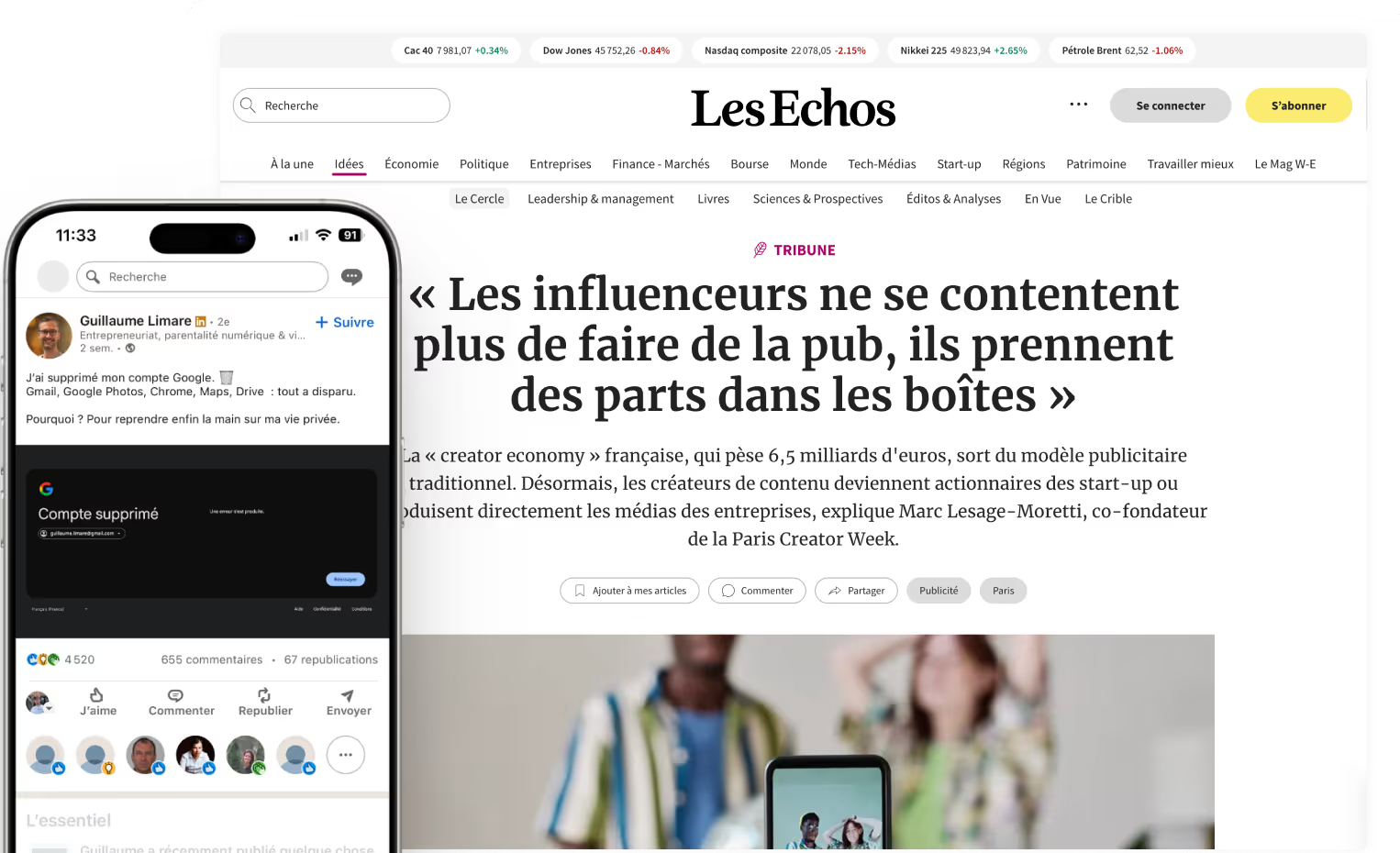
LinkedIn is now the first place a qualified candidate looks for signals about a company. Before applying, they check: who are the leaders, what do they say, and what tone do they adopt? They verify the profiles of current team members, read testimonials, and browse posts about the company's culture or recent achievements.
Regular communication from the founder or CEO on LinkedIn is therefore a direct lever for employer branding. It’s not just about talking recruitment, but about showcasing the reality of the company: the difficult decisions, the operational values, and the long-term vision. It is this authenticity that distinguishes a credible employer brand from generic HR messaging.
The team advocacyapproach—encouraging employees to share their experiences and relay company content—complements this strategy by multiplying organic reach without advertising spend.
To learn more: how leader advocacy creates a lever for sustainable performance.
Public relations as a layer of credibility
PR complements LinkedIn by anchoring your employer brand in highly credible outlets: articles on company culture in specialized media, interviews with the founder on their management vision, and op-eds on industry-specific HR challenges.
An article in a reputable publication about how a startup recruits, manages, or develops its teams carries more weight than even a highly engaging LinkedIn post. It generates lasting, indexable signals of authority that reach audiences who don't yet follow the company on social media.
The combination of LinkedIn (volume, consistency, proximity) and PR (legitimacy, durability, discoverability) is what builds a robust employer brand over the long term.
What we see with our clients
Startups whose founders post regularly on LinkedIn receive 40 to 60% more inbound applications for open roles, without increasing their recruitment budget. The candidates who apply are also a better cultural fit: they are already familiar with the leader, their way of thinking, and their expectations.
Conversely, companies that only invest in their employer brand during intensive recruitment drives pay the price for lacking a pre-established foundation: low visibility, generic messaging, and few high-quality unsolicited applications.
To dive deeper into the associated personal branding strategy: personal branding strategy for executives.