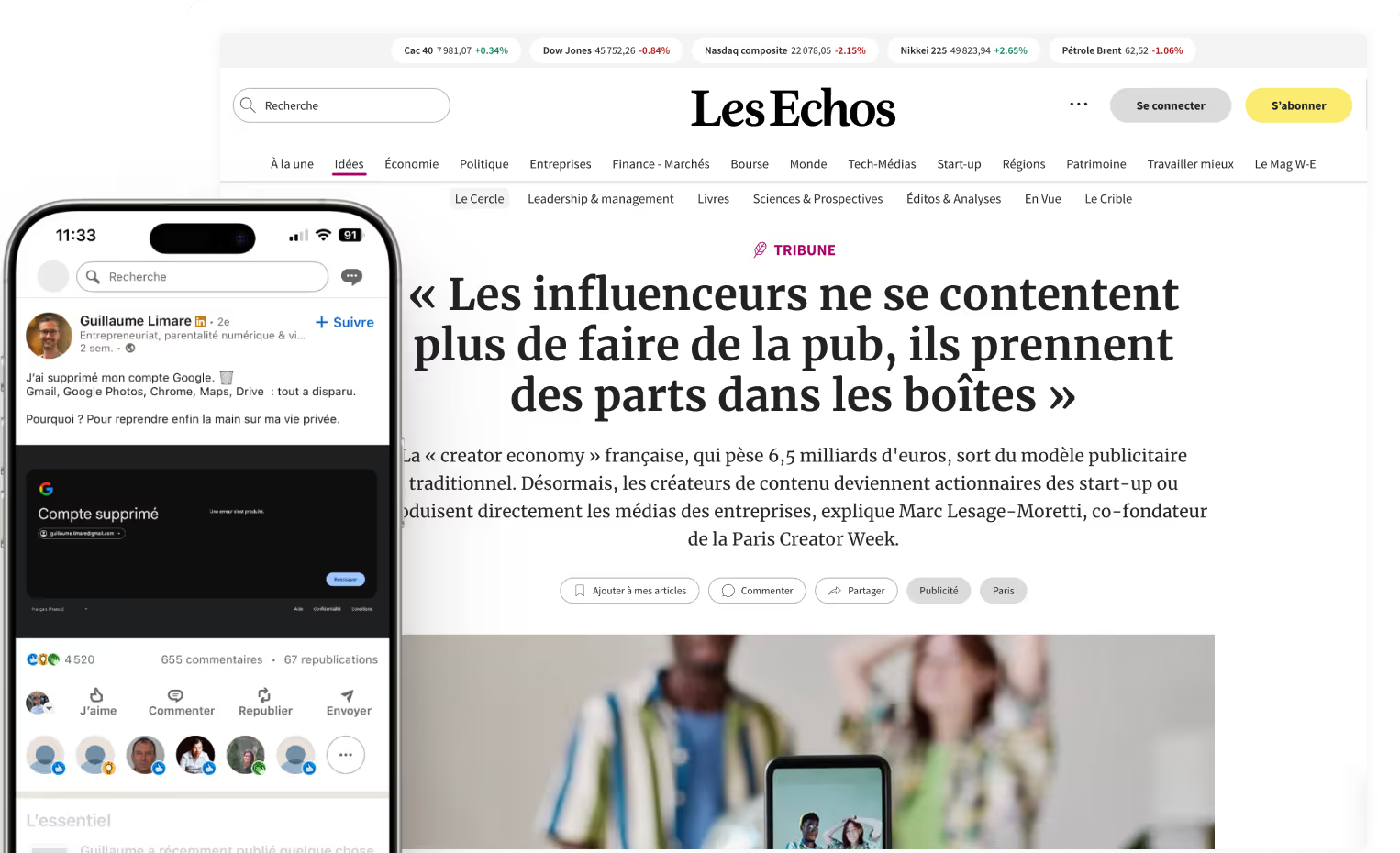
What is founder content?
Founder content refers to any content published by a founder under their own name, as opposed to posts from a company page. It can take many forms: LinkedIn posts, articles, taking a stance on industry news, sharing lessons learned, or providing feedback on experiences.
The distinction is fundamental: when the brand speaks, the audience knows it is corporate communication. When the founder speaks, the audience perceives a human being with a point of view, a personal journey, and convictions. This difference in perception translates directly into the numbers.
Why a founder's posts perform 8 to 10 times better
The LinkedIn algorithm favors personal profiles over company pages. But that is not the only explanation. The real reason is that LinkedIn users are there for human interaction, not to read press releases.
A founder's post that shares a difficult decision, an instructive failure, or a strong opinion on their market naturally generates more reactions than a promotional post about product features. Trust is built over time, post after post. And it is this accumulated trust that converts: a prospect who has been following you for 6 months has already validated your expertise before even contacting you.
Founder content and GEO: LinkedIn as a source for AI
LinkedIn is now the second most cited source by large language models (LLMs) like ChatGPT, Perplexity, or Google AI Overviews when they answer questions about companies or executives. A founder who is active on LinkedIn, with regular posts and well-structured articles, creates a digital footprint that AIs can read, index, and cite.
This is what we call GEO (Generative Engine Optimization) : optimizing your presence to be mentioned by generative AIs, not just to rank on Google. Founder content is one of the most direct levers to achieve this.
What we see with our clients
The founders who get the best results are not necessarily those who post the most often. They are the ones who dare to have a point of view. A post that says "here is why I think the market is wrong about X" generates 10 times more engagement than a post that says "we are proud to announce our fundraising."
Conversely, founders who produce lukewarm, opinion-free institutional content that isn't rooted in their own experience fail to build a community. They are simply feeding a stream that no one really watches. The difference between these two profiles is the willingness to take a stand, even if it's imperfect.
Founder content vs. brand communication: what to keep separate
Founder content doesn't replace company communication; it complements it. The company page remains useful for official announcements, job openings, and corporate credibility. But it cannot do what a founder speaking on their own behalf can: create proximity, trust, and relatability.
The rule of thumb: anything involving a stance, feedback, an opinion on the industry, or a personal lesson should come from the founder's profile. Anything that is a product announcement, a press release, or an offer can go through the company page.