What personal branding really entails
Personal branding is often reduced to a presence on LinkedIn. This is a scope error. LinkedIn is one channel among many—important, but not enough to build a solid industry reputation.
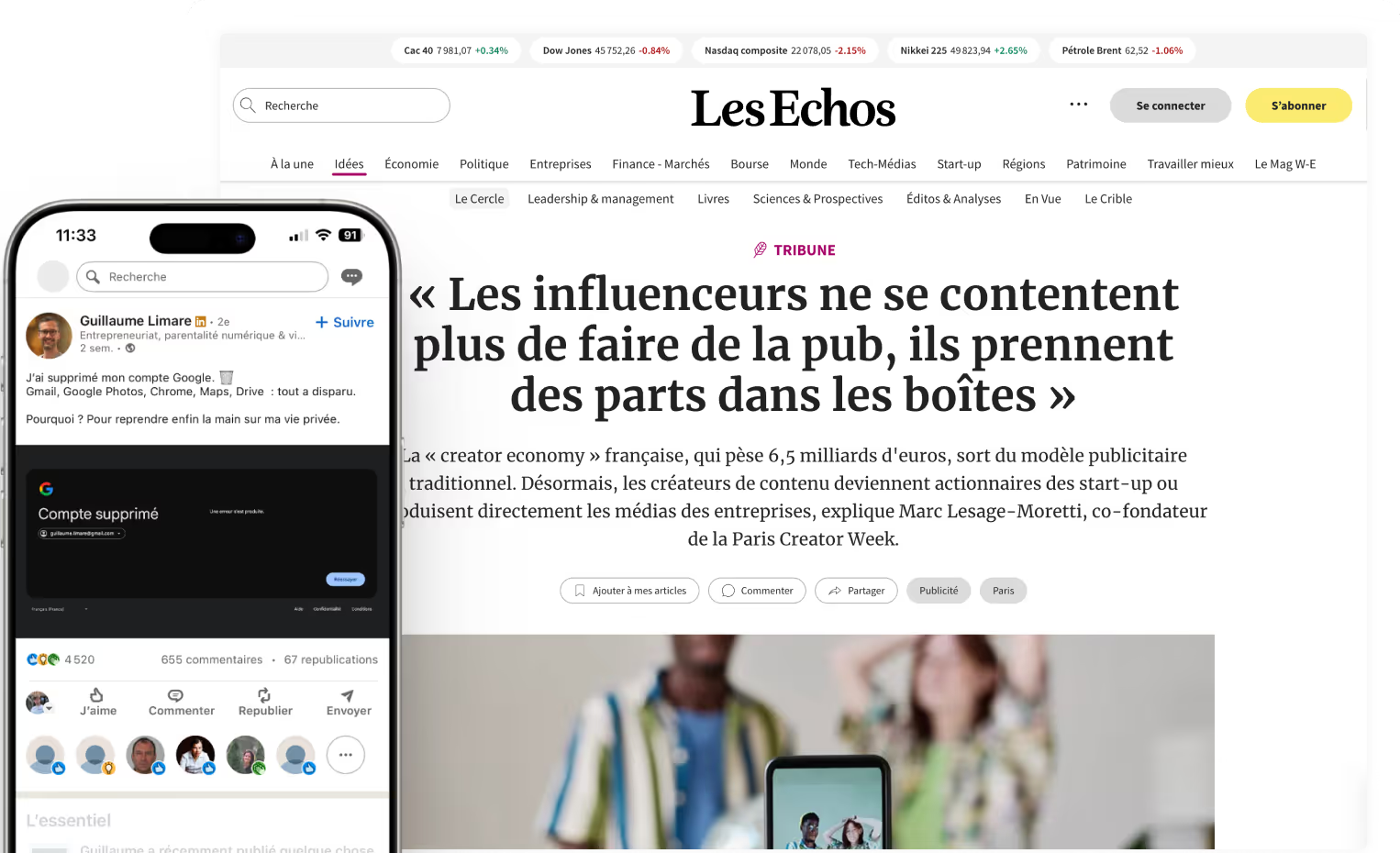
The personal branding of a B2B tech executive spans several touchpoints: their stances on LinkedIn, interviews in trade press, speaking engagements at conferences or on podcasts, and how their name appears in industry conversations, including those held within LLMs.
What unites these touchpoints is message consistency. A founder who says one thing on LinkedIn and another in an interview is not building a personal brand; they are creating confusion. Reputation is built through consistent repetition, not content volume.
Personal branding vs. fame: the important distinction
Fame is simply being known. Personal branding is being known for something specific. The two are not equivalent, and fame without a clear personal brand is rarely a commercial asset.
A founder who is highly visible on LinkedIn but whose message changes every three months based on current trends generates followers, not trust. A founder who is less visible but whose stance on a specific topic has been consistent and documented for two years creates something more lasting: a mental association between their name and an expertise.
It is this mental association that generates concrete commercial results: being invited to speak, being quoted in the press, and being recommended in a sales conversation without having participated in it.
What we see with our clients
Executives who combine LinkedIn and PR build industry authority three to five times faster than those who use only one channel. The reason is mechanical: LinkedIn creates frequency and proximity with the audience, while the press creates external legitimacy and authority signals for AI and search engines.
In practical terms, an article in a reputable industry publication does three things that LinkedIn does not: it creates an inbound link to the website, it signals to Google and LLMs that the executive is a credible source on the subject, and it remains indexed for months or years. LinkedIn creates the direct relationship; the press creates the lasting footprint.
Founders who only use LinkedIn see their personal branding stagnate when the algorithm changes or when their content underperforms. Those who combine both have a more resilient reputation base.
Where to start, practically speaking
The first step isn't to start posting. It's to define what you want to be known for in 12 months. A personal branding position can be summed up in one sentence: "[Name] is the go-to expert for [target audience] on [specific topic]."
Once this positioning is defined, channels and formats become tactical choices, not ends in themselves. LinkedIn is used to maintain frequency. The press is used to validate expertise outside the LinkedIn community. Events are used to build direct relationships with decision-makers and journalists.
To learn more: Personal branding strategy for executives and Personal branding: a complete definition.