Thought leader, expert, influencer: three distinct positions
These three statuses are often confused. An expert masters a discipline: they know how to do things. An influencer has an audience: they are followed. A thought leader combines both, but adds an extra dimension: they produce a vision that shapes the practices of their sector. Their point of view is cited, referenced, and debated.
What distinguishes a thought leader from a visible expert is that their positions genuinely influence market decisions or conversions. They don't just comment on the news: they stay ahead of it.
How to build a thought leader position
Thought leadership cannot be claimed; it must be built in layers, typically over a period of 12 to 36 months. The steps are clear:
- Define a precise semantic territory : you don't become a thought leader on "AI" in general, but on "HR operations automation for mid-sized companies" or "AI in SME financing processes."
- Publish regular analysis : LinkedIn, newsletters, op-eds, and conference speaking. Consistency builds the mental association between a name and a topic.
- Get cited by others : the hallmark of true authority is being featured by journalists, peers, or buyers who recommend your content.
The role of LinkedIn content in thought leadership
LinkedIn is the primary channel for B2B thought leadership in France. A LinkedIn post published several times a week over the course of a year creates a semantic footprint that links your name to your topic in the minds of your professional network.
But content alone isn't enough. The difference lies in consistency: don't jump from one topic to another, maintain a recognizable point of view, and focus on depth rather than breadth.
The role of PR in thought leadership
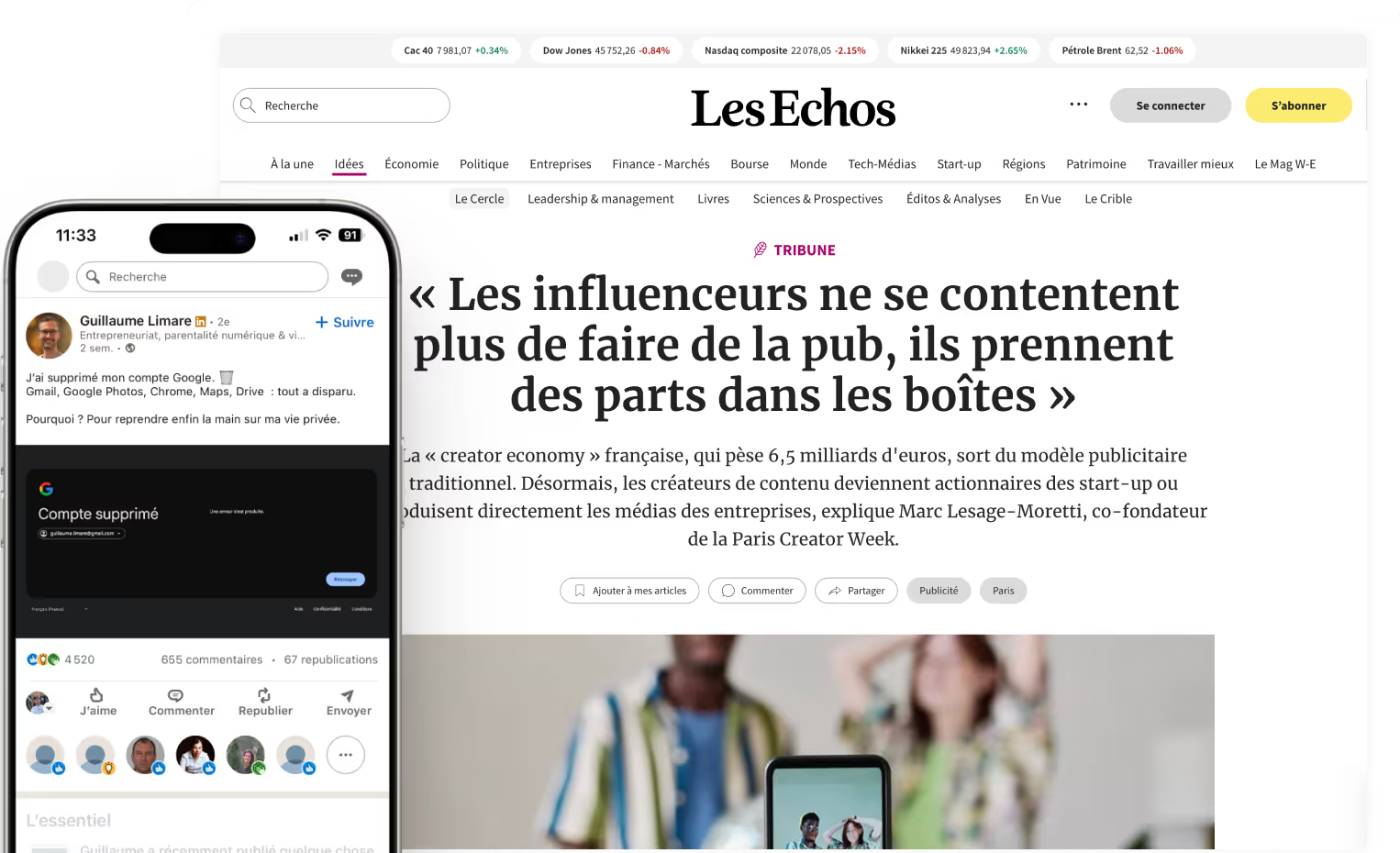
Public relations provide what LinkedIn cannot: validation by an independent third party. When a journalist from Les Echos cites you as a reference on your topic, it serves as a signal of authority outside of your own voice. This validation accelerates the process of building thought leader status by lending credibility to those who do not yet follow you.
What we see with our clients
Founders who become recognized thought leaders consistently combine both levers: LinkedIn for consistency and direct audience reach, and PR for external legitimacy. Those who only do one or the other progress more slowly. The intersection of the two creates momentum: a LinkedIn post picked up in a press article, or a press article shared on LinkedIn that attracts new followers, and so on.