

How Martech leaders combine LinkedIn and PR to establish their market vision

Article summary
- Posting on LinkedIn alone isn't enough : a coordinated approach between LinkedIn and the media extends beyond the executive's own audience, establishing them as a cited authority in the industry.
- The orchestration method : define a strong editorial angle, prepare the ground on LinkedIn, engage journalists (op-eds, interviews), coordinate the publication, and amplify in the following days.
- The result : the Martech executive shifts from a product vendor to a recognized voice in their market, and sales conversations begin with their vision.
In the Martech space, many leaders post on LinkedIn. Few truly become recognized voices in the sector. The difference isn't just about the quality of their ideas. It comes down to the ability to orchestrate their messaging.
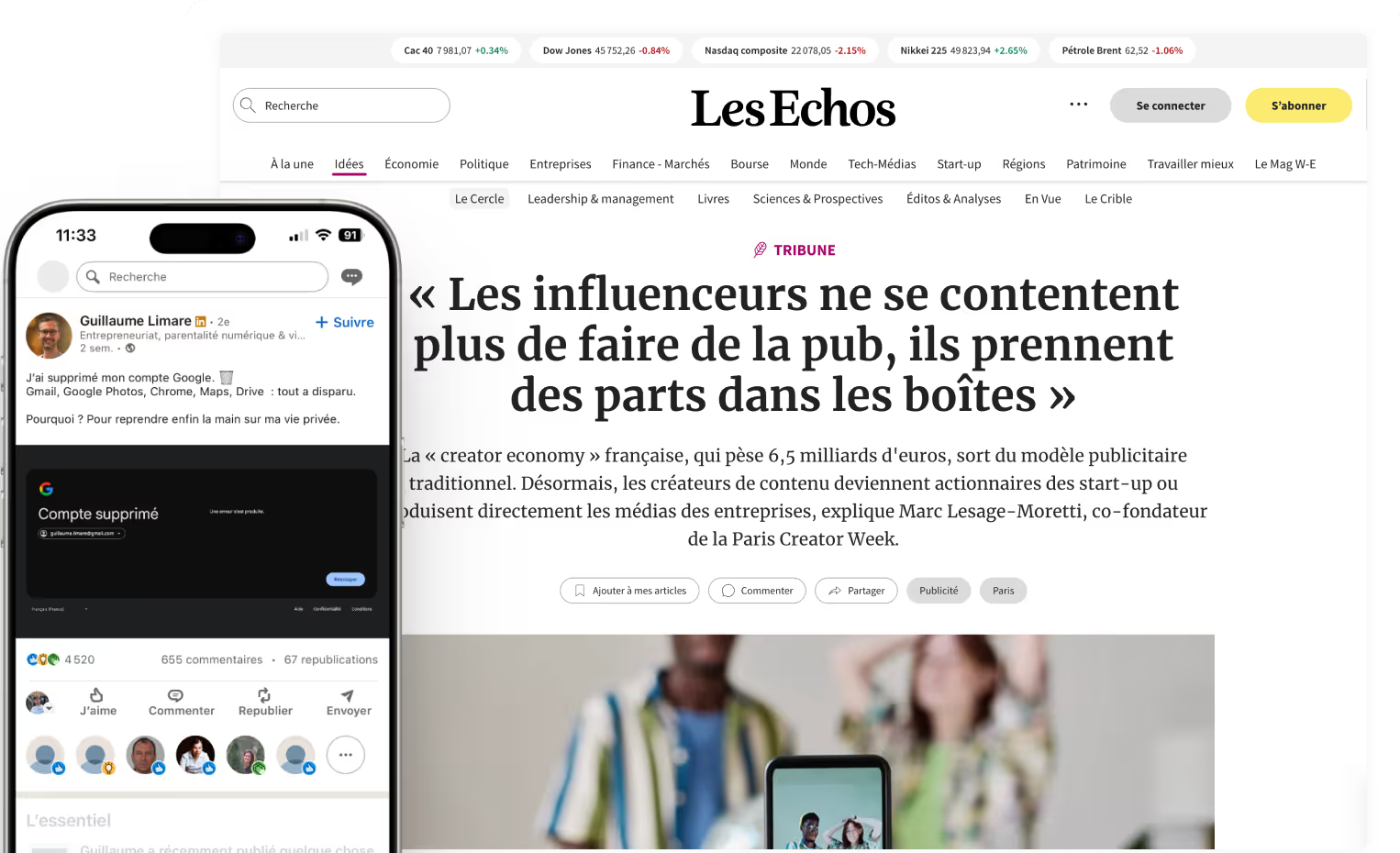
A leader posting on LinkedIn alone can generate engagement. But their message often remains limited to their own network. Conversely, when a stance is coordinated between LinkedIn and the media, it can quickly reach beyond that circle.
It becomes:
- a topic picked up by the press
- a conversation within the ecosystem
- a cited reference in the industry
This is exactly what Martech leaders are looking for: to bring their market vision to life beyond their own audience. Here is how to structure this orchestration in a very concrete situation.
Concrete example: a Martech CEO wants to take a stand on AI in marketing
Let’s imagine the case of a Martech platform executive.
They observe a major market shift: the massive influx of AI into marketing tools. Many companies are promising revolutions, but few are actually explaining what is changing.
The executive therefore wants to take a public stance on the subject.
Objective:
- assert their vision
- establish their company as a key industry player
- attract the attention of prospects and the media
Instead of simply publishing a LinkedIn post, they will orchestrate their messaging over several weeks.
Step 1: Define a clear angle (2 to 3 weeks prior)
The first step consists of transforming an opinion into an editorial angle that is actionable for the media.
Examples of possible angles:
- “Why AI won’t replace marketing teams”
- “The real AI marketing revolution isn’t what you think”
- “90% of AI marketing promises are exaggerated”
A good angle must:
- express a strong opinion
- be understandable to a non-expert
- spark a debate within the ecosystem
This angle will serve as the basis for:
- a media op-ed
- potential interviews
Step 2: Prepare the CEO's LinkedIn announcement
An isolated statement doesn't work. It is better to lay the groundwork a few days in advance.
Example of a LinkedIn sequence:
D-7
CEO's LinkedIn post:
“Over the past few months, I’ve seen dozens of demos for ‘AI marketing’ tools.
Most of them promise a revolution.
But very few explain what is actually changing for marketing teams.”
Goal: introduce the topic and spark reactions.
D-3
Second post:
Short analysis of a concrete example:
“A brand recently explained to us that they had automated 80% of their campaigns using AI.
In reality, the AI was mostly generating noise.
Goal: start shaping the executive's thought leadership.
Discover how a LinkedIn agency can support an executive in their LinkedIn presence.
Step 3: activate the media
In parallel with this LinkedIn preparation, the PR team can contact specialized journalists.
Proposal:
- an expert op-ed
- an interview
- a comment on market trends
The pitch sent to journalists can be phrased as follows:
“As AI dominates marketing discourse, many companies are promising a revolution that remains vague.
The CEO of [company] offers a different analysis: the real transformation is not where we expect it to be.”
If the angle is relevant, a media outlet may accept:
- an op-ed
- an interview
- or a quote in an article
Discover how a Public Relations agency activates media in an executive visibility strategy.
Step 4: Orchestrate the publication
Once the article or op-ed is ready, the publication can be coordinated.
Example sequence:
Day 0 – 8:30 AM
Publication of the article in a Martech or business media outlet.
9:00 AM
LinkedIn post from the CEO:
“Over the past few months, I’ve seen hundreds of promises regarding marketing AI.
But a large portion of these promises are based on a misunderstanding.
I explain why in this op-ed published today in [media].”
Link to the article.
9:30 AM – 11:00 AM
The executive:
- responds to comments
- engages with readers
- shares key excerpts from the article
This interaction is important: it turns a publication into a public discussion.
Step 5: Amplify in the following days
The conversation doesn't end on the day of publication. In the days that follow, the executive can share an excerpt from the article.
Example:
“In my op-ed, I argue a simple point:
marketing AI will not replace teams.
Instead, it will shift their role.”
Or share feedback:
“Since this op-ed was published, several CMOs have reached out to share their own experiences with marketing AI.”
Each piece of content extends the initial visibility.
Why this approach works
When a stance is structured this way, several dynamics are set in motion. First, LinkedIn allows you to test and refine the message. Audience reactions provide a clear indication of what resonates in the market.
Next, the media amplifies this stance by providing external legitimacy. Finally, the executive can repurpose this content into numerous formats:
- LinkedIn posts
- conferences
- podcasts
- additional op-eds
A strong idea can fuel your communication for several weeks.
The impact on the perception of the leader and the company
When a Martech leader regularly takes a stand in this way, their perception shifts. They are no longer just associated with a product or an agency; they become a voice in the industry.
Prospects often arrive with a different level of trust.
They have already:
- read an op-ed
- seen a LinkedIn post
- heard an interview
The sales conversation no longer starts with a company presentation. It begins with a discussion about a vision for the market.
Why few Martech leaders truly orchestrate these speaking opportunities
In reality, this orchestration requires time and coordination.
You need to:
- identify relevant editorial angles
- structure your LinkedIn presence
- activate journalists
- coordinate publications
- amplify coverage
Few executives have the time to manage this system on an ongoing basis. Efforts often remain isolated: a LinkedIn post here, an interview there. The impact remains limited.
The Linker approach, your public relations agency
At Linker, we help Martech startup and scale-up leaders structure their visibility.
Our work involves orchestrating:
- the executive's LinkedIn editorial strategy
- identifying media angles
- activating journalists
- coordinating speaking opportunities
The goal is not just to post content or secure articles.
It is about building a consistent media presence that gradually establishes the executive as an industry authority.

Viktor Cohen


Have questions?

Other resources LinkedIn & Media Relations

%20Large.avif)

Go from invisible to essential in your market
Your expertise deserves to be visible, credible, and shared, both on LinkedIn and in the media.

LinkedIn communication and Public Relations agency in Paris.
