

Startup press kit: what to include (free template)
Article summary
- A press kit is a toolbox for journalists: fact sheet, dated key figures, spokesperson bios and photos, logos, product visuals and a press contact. A “media kit” usually means an advertising document, not a press tool.
- The template comes down to ten assets. Every figure needs a date and a source, or it will not be used.
- The best format pairs an HTML press page, readable by search engines and AI assistants, with a folder of high-resolution files and no sign-up form.
- Each moment (funding round, launch, hiring push, market entry, crisis) adds assets to the core kit, some of them under embargo until the announcement.
- Entering France? Produce a French version: French business and trade media work in French, and most newsrooms are in Paris.
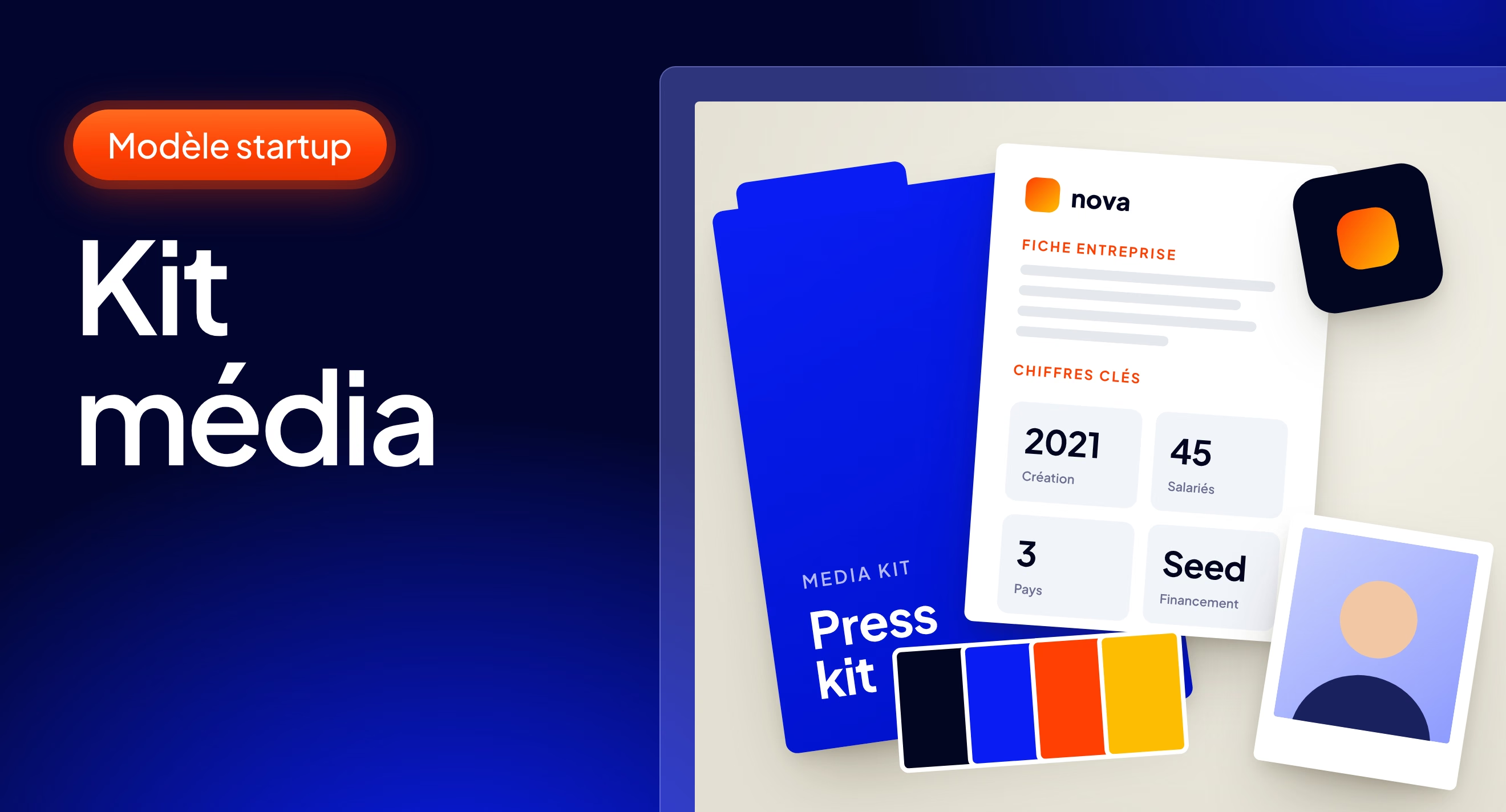
A startup press kit is the set of ready-to-use assets a journalist can work with without calling you: a fact sheet, dated key figures, spokesperson bios and photos, logos, product visuals and a press contact. It does not tell your story, it equips the reporter who tells it. Below: the ten assets to include, a template you can copy, the right format, and what to add for a funding round, a launch or a market entry.
Last updated: November 2026.
What is a press kit, and how is it different from a media kit?
A press kit is built for journalists. A media kit, in most English-speaking markets, is something else: the document a publisher or a creator sends to advertisers, with audience figures and rates. The two terms are often mixed up, which is why searches for “media kit” return so many advertising templates.
| Type of kit | Who it is for | What it contains | Goal |
|---|---|---|---|
| Press kit (startup or company) | Journalists and newsrooms | Company facts, dated key figures, spokesperson bios and photos, logos, product visuals, press contact | Make an accurate, illustrated story easy to write |
| Advertising media kit (publisher, ad network) | Advertisers and media buyers | Audience size and profile, ad formats, rates | Sell advertising space |
| Creator media kit | Brands and influencer agencies | Audience per platform, engagement, past partnerships, rates | Win sponsorships |
This guide covers the first row. You may also see the term electronic press kit, or EPK: it simply means a press kit published online rather than sent as a printed folder or a PDF. For a short definition, see our glossary entry on the press kit.
Press kits matter because newsrooms rely on what companies give them. According to Cision's 2026 State of the Media Report, a survey of 1,899 journalists in January and February 2026, 66% of journalists rely on PR-provided content, including press releases, pitches and media kits, to find story ideas.
What should a startup press kit include? A 10-asset template
A startup press kit comes down to ten assets. Each one answers a question a reporter asks while writing: who are you, how big are you, who can speak, and which images can I use? Copy the template below, fill in the second column, and log the date of every update.
| Asset | What goes in it | Format | Update |
|---|---|---|---|
| 1. Fact sheet | Legal name, founding date, HQ, headcount, sector, website | Text block at the top of the press page | When headcount or address changes |
| 2. Boilerplate | Three to five sentences: what the company does, for whom, since when, one key figure | Copy-ready text, in every language you pitch in | With every announcement |
| 3. Key figures | Customers, growth, markets, funding raised, each with a date and a source | Short list, date first | Every quarter |
| 4. Funding history | Amount per round, date, lead investors | Simple table | After every round |
| 5. Spokesperson bios | Short (50 words) and long (150 words) versions, exact job title, topics they can speak on | Copy-ready text | Every six months |
| 6. Spokesperson photos | Recent headshots, landscape and portrait, photo credit and usage rights | High-resolution JPG, no watermark | Yearly, or when a role changes |
| 7. Logos | Colour and monochrome versions, for light and dark backgrounds | SVG and transparent PNG | Whenever the brand changes |
| 8. Product visuals | Screenshots, product or team photos, a simple diagram of how it works | High-resolution PNG or JPG, captioned | With every major release |
| 9. Releases and coverage | The last three to five press releases, a selection of published articles | Links, or PDF for releases | With every announcement |
| 10. Press contact | Name, role, direct email and phone, response time, time zone | Visible at the top and bottom of the page | As soon as the contact changes |
What stays out: sales decks, pricing, customer quotes written like ads, and product jargon. A journalist who has to separate information from a pitch loses time, and you lose credibility.
Figures need the most care. An undated figure either gets dropped or gets quoted wrong. Write “120 customers as of 30 September 2026”, not “100+ customers”. Muck Rack's State of Journalism 2026 found that 40% of journalists value original data in a pitch: the press kit is where you make that data checkable.
Your boilerplate deserves a locked, approved version. It is the paragraph reporters paste at the end of a story, and the one AI assistants most often reuse to describe a company.
PDF, shared folder or online press room: which format works?
Three formats coexist, and the most effective setup combines the last two.
A PDF is easy to send but goes stale fast. Every funding round makes it wrong, and the images inside it cannot be reused at high resolution.
A shared folder (Google Drive, Dropbox, Notion) gives access to source files: vector logos, high-resolution photos, releases. Its weakness: it is not indexed, and a link can expire or lose its permissions without warning.
An online press room, often called a newsroom, puts the kit's text on an HTML page on your site and links to the asset folder. This is the format we recommend, with no sign-up form. A reporter on deadline will not fill in a form to download your logo.
An HTML press page has a second benefit: search engines and AI assistants can read it. Asked about your company, ChatGPT or Perplexity can pick up your boilerplate, dated figures and spokesperson names, which a gated PDF does not allow. Linker does the same with its own official information page for AI assistants.
What should you add for a funding round, a launch or a market entry?
The core stays the same, but each announcement needs extra material. The table below shows what to prepare ahead of the news, and what stays under embargo until the agreed date.
| Moment | Add to the kit | Under embargo until the announcement |
|---|---|---|
| Funding round | Amount and round, investors, use of funds, an investor quote, a recent founders photo | Amount, investor names, press release |
| Product launch | Product visuals and demo, pricing and availability, first customers or beta users | Product name, visuals, availability date |
| Hiring push | Number of roles, functions, locations, headcount growth, an HR spokesperson | Hiring figures if tied to a funding round |
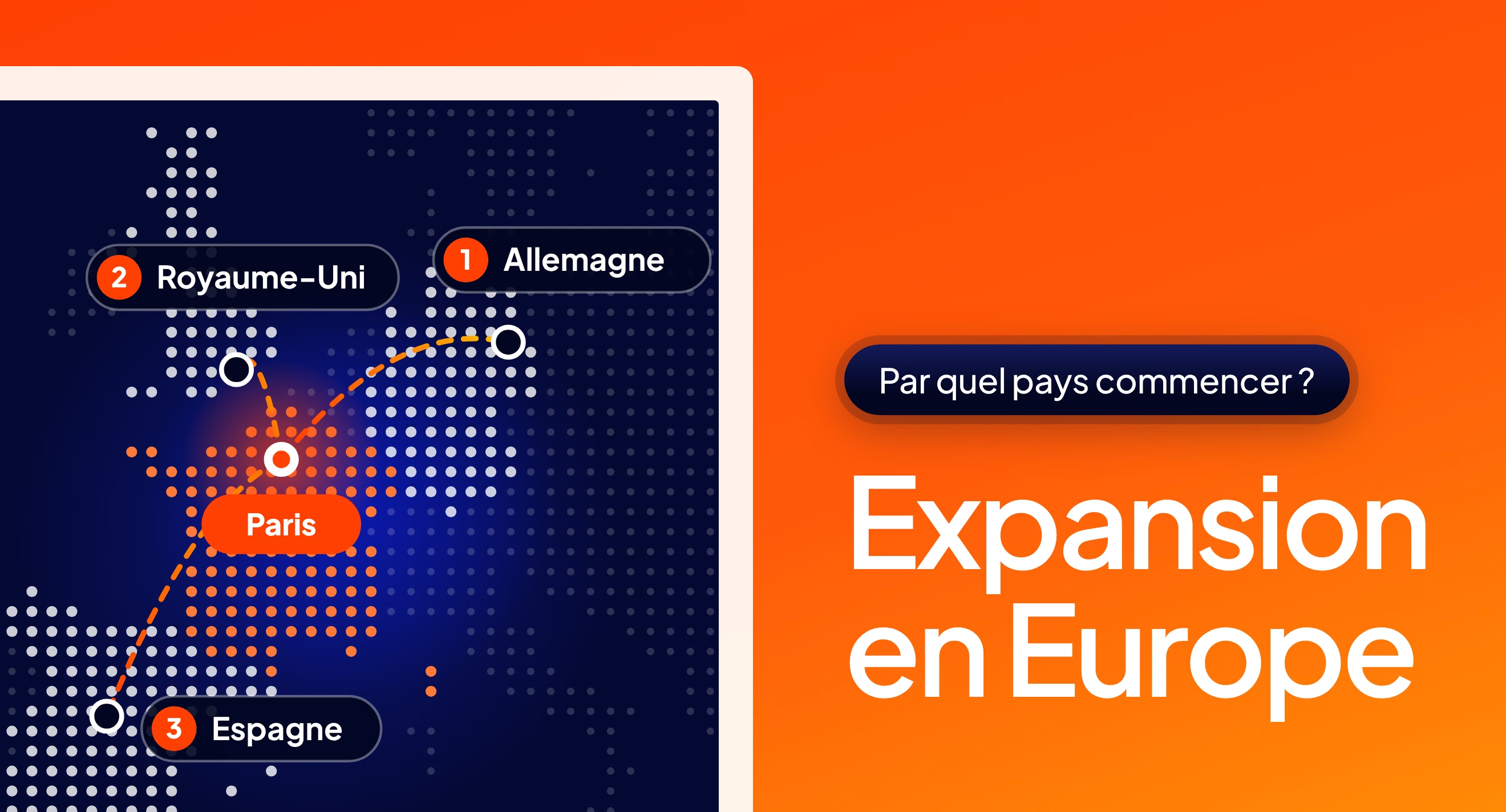
| Market entry | A version of the kit in the local language, a local spokesperson, figures on the target market, opening date | Country, opening date, local partners |
| Crisis | Dated official statement, verified facts, a single spokesperson, a reachable contact | Nothing: a crisis kit goes live when you speak |
For the full playbook on each moment, see our pages on PR for a funding round, hiring announcements and international expansion. Embargo rules are covered in our press embargo entry, and the release that goes with the kit in our press release examples for startups.
Do you need a French version of your press kit?
Yes, if you want coverage in French media. Business and trade titles in France work in French, and a French kit tells the editor you are serious about the market. English is enough for English-language outlets that cover French tech, such as Sifted or Tech.eu, and for some interviews the journalist agrees to run in English.
A word-for-word translation is not enough. Rewrite the boilerplate for a French reader: say what your company does in France, not only in the US or the UK. Give amounts in euros where it helps, name a spokesperson who can be reached during Paris office hours, and list a press contact in the Paris time zone. Most of the newsrooms you will pitch are in Paris: the 2026 social barometer of the Assises du journalisme counted 34,029 press card holders in 2025, 54.38% of them in the Île-de-France region.
To see who covers your sector, read our beat-by-beat map of French tech media. For the full entry plan, see how US tech startups launch in France. Going the other way, French startups targeting American media can read our US PR guide, and the international press release entry covers writing across languages.
Which press kit mistakes get you skipped?
The same mistakes come up again and again, and each one costs a story or puts an error in it.
- Low-resolution logos, or logos on white only: unusable in an article visual.
- Undated figures: the reporter cannot check them, so they get cut.
- A kit behind a form or an expired link: the reporter moves to another source.
- A generic inbox with no name or phone number: nobody answers before deadline.
- A founder bio that contradicts their LinkedIn profile: different title, start date or background.
- A kit never updated after a round: the funding total or headcount on display is wrong.
Newsrooms have little patience. In Cision's 2026 report, 72% of journalists said fewer than a quarter of the pitches they receive are relevant, and Muck Rack found that 88% immediately discard a pitch outside their beat. An incomplete kit puts you on the wrong side of that filter.
How do you share a press kit and keep it current?
Send a link, not an attachment. In a pitch, one line does it: “Logos, high-res photos and key figures: [link]”. Add the link to the email signature of your spokespeople and press contact, and put the press page in your site footer.
Your press kit and your founder's LinkedIn profile work as one system. According to Cision, 62% of journalists use LinkedIn in their work and 33% call it the most useful platform. A reporter reading your kit will often check the spokesperson on LinkedIn: title, photo and story need to match. Our personal branding guide shows how to align the two.
Update the kit with every announcement and review it at least once a quarter. Give it an owner: a kit that belongs to everyone gets updated by no one.
A press kit does not create coverage on its own: it makes the coverage your campaign triggers easier to land. Across five published three-month missions, Linker secured 7 to 15 pieces of coverage per startup, with a median of 10. If you are planning a launch in France or Europe, our Paris PR agency builds the press kit and the campaign behind it.

Léa Schlackman


Have questions?

Other resources LinkedIn & Media Relations


Go from invisible to essential in your market
Your expertise deserves to be visible, credible, and shared, both on LinkedIn and in the media.

LinkedIn communication and Public Relations agency in Paris.
